
The shift in AI: Why organizations are asking different questions
Last year, many conversations about artificial intelligence (AI) centered on possibility. Organizations were exploring what the technology could do, testing use cases, and experimenting with new ways of working. Thinking back to the discussions at Ascend APAC, there has been a noticeable shift in the industry over the past year.
AI itself has continued to advance, but leaders are no longer focused exclusively on AI’s capabilities. Instead, they are more concerned with how it fits into day-to-day tasks and how people can use it with confidence.
From experimentation to everyday operations
A year ago, AI pilots were helping teams learn what their technology solutions were capable of. In many cases the focus was on experimentation rather than long-term adoption.
Today, pilots are becoming formal programs. Individual use cases are becoming repeatable processes. Attention is shifting toward scalability, consistency, and measurable business outcomes.
This change is important because it shows organizations have raised their expectations for AI and leaders want clearer measures of success and accountability without introducing unnecessary risk.
A lack of trust is one of the biggest blockers to AI adoption in enterprises. Without it, AI remains a promising idea. With it, organizations can start integrating AI into their operational workflows and broader business strategies.
From standalone tools to connected ecosystems
Another major shift is how organizations think about technology itself.
Not long ago, conversations were based on individual AI capabilities. Leaders wanted to understand what specific applications could achieve and which tools offered the best features.
Today, organizations are more interested in how systems work together. AI may generate insights and recommendations, but its effectiveness is based on the quality and context of the information supporting it.
This is why disconnected systems and data silos are regular conversation topics across the industry. When information is fragmented, it becomes more difficult for AI to generate meaningful recommendations.
Connected workflows are becoming just as important as AI capabilities. Information needs to be available when and where it is needed, while teams need confidence that the underlying data is accurate, current, and complete.
This is where platforms such as MRI Agora Intelligence and Agora Orchestrator can play an important role. By helping organizations connect operational data, extract relevant insights, and trigger actions across workflows, they support a more integrated approach to decision-making.
From capability to responsibility
Accountability is another area gaining more attention. Security, compliance, governance frameworks, and trust have moved to the center of the AI strategy.
That reflects the healthy growth of the market. Leaders need assurance that information is being used appropriately, standards are being maintained, and that there is clear accountability for outcomes. Human oversight is still essential.
Questions around accountability are important. Organizations recognize that responsibility cannot be delegated to technology alone. Governance, previously considered a roadblock, is now a business requirement.
The biggest shift is mindset
When looking across all these developments, it becomes clear that the greatest change is organizational.
Organizations have largely moved on from asking what AI can do. Now, they want to know what delivers value, how trust is established, how governance is maintained, and how people can confidently use AI in their daily work.
Access to AI is becoming more widespread across industries. Competitive advantage is now less about having access to the technology and more about how effectively organizations use it.
Anticipate, Act, Outperform: AI for Modern Commercial Property
AI for Modern Commercial Property Commercial property is under increasing pressure; from rising costs and compliance demands to shifting tenant expectations and investor scrutiny. This session explores how property leaders are moving from reactive ma…
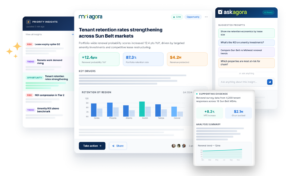
Most AI generates answers. MRI Agora generates outcomes
Built on 50 years of real estate intelligence, MRI Agora® finds the signals, runs the workflows, and keeps your team focused on what only they can decide.