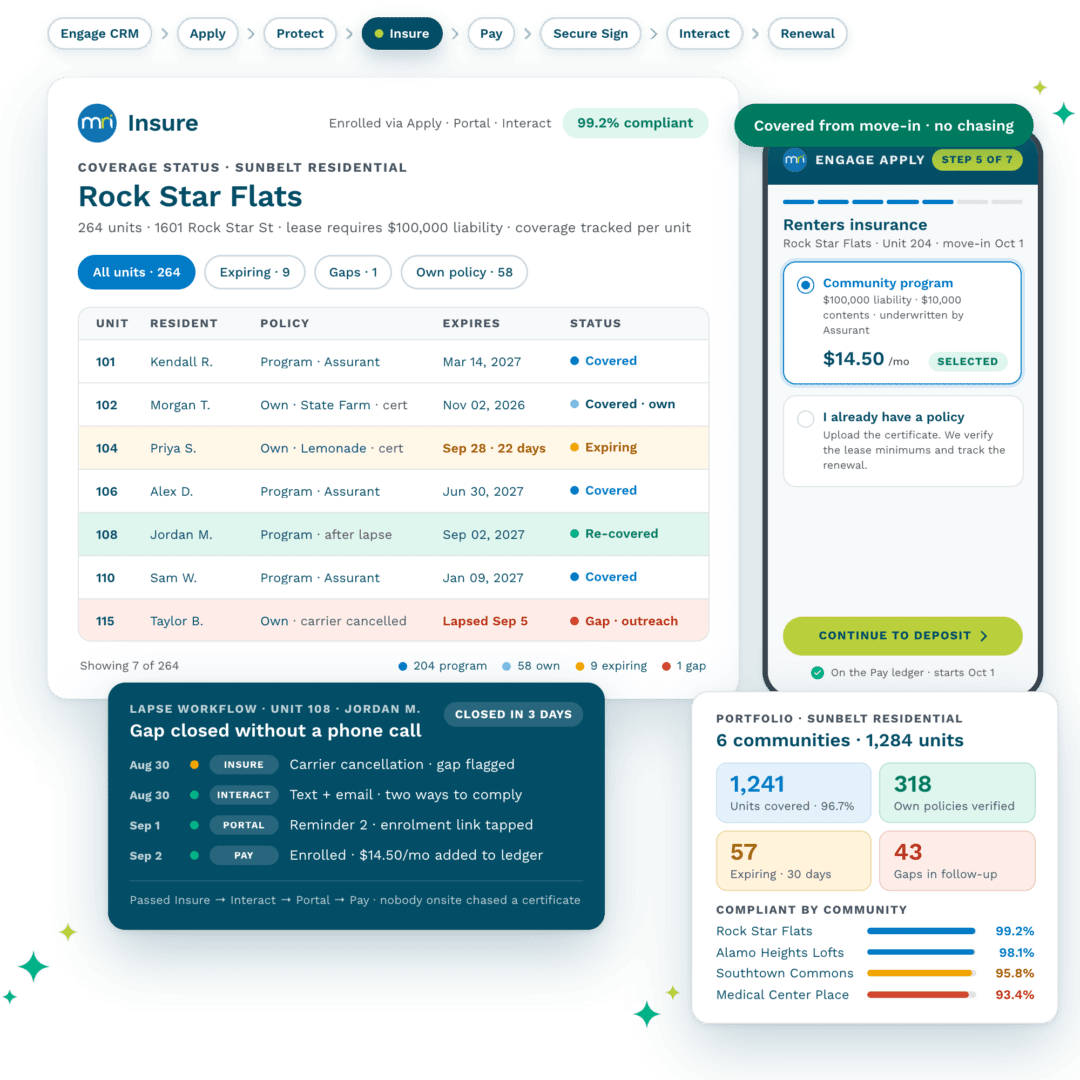
Engage Insure by the numbers

Insured at move-in, unverified ever since

Certificates get filed and forgotten, policies lapse unnoticed, and the lease requirement becomes a piece of paper until a loss makes it real. Here’s how MRI keeps coverage verified for the life of the lease:

Know which units are actually covered, today

Every resident policy is tracked against the unit it covers, whether the resident bought it through the program or brought their own. Expiries are visible before they happen, lapses surface when they happen, and the portfolio view answers the compliance question without anyone opening a filing cabinet.

A requirement you cannot measure is not a requirement. This is the part that makes it one.

Somebody else does the chasing

When a policy is about to lapse, the follow-up is handled — the resident is contacted, given a route back into compliance, and the property is told where things stand. Your leasing team is not the one sending the third reminder email, and not the one deciding what to do when it is ignored.

If a resident cancels or lets a policy lapse anyway, force-placement coverage closes the gap so the unit is never uncovered. Dedicated insurance specialists handle the whole path, supported by an AI-powered operations portal that captures the critical information automatically.

Coverage arranged before the keys, not chased after them

Insurance is offered inside Engage Apply, at the point the resident is already completing an application and paying a deposit. Coverage starts with the lease rather than three weeks later, and the certificate does not have to be requested, received, and filed by anyone.

Residents who prefer their own insurer say so at the same moment, which is also when it is easiest to record.

Requiring insurance and having insurance are not the same thing.

Most properties have the requirement in the lease, a certificate on file from move-in day, and no idea how many of those certificates are still valid. The gap between the policy you require and the coverage that exists is invisible right up until the moment it matters, and by then it is not a compliance problem — it is a loss with nobody behind it.

Engage Insure closes the gap automatically.

An unenforced lease requirement is hidden risk.

Exposure you can actually see

A portfolio-level view of which units are covered turns an assumption into a number — one you can report to ownership and to your own insurer.

Work that leaves the leasing office

No certificates to request, receive, file, or re-check. No onsite staff deciding how hard to push a resident whose policy lapsed.

Coverage that starts with the lease

Arranged during the application rather than chased after move-in, which is when compliance rates are set for the whole tenancy.

Where insurance already fits

Insurance is not a separate errand at the end of a lease. It is arranged in the application, charged alongside the other money that moves at move-in, and re-checked at renewal — using the same resident record as everything else in Engage.

MRI ENGAGE PROTECT

Fraud & Resident Screening

Credit, criminal, eviction, income and rental history checks, plus a professional screener for anything ambiguous.

MRI ENGAGE APPLY + CONNECT

Leasing & Resident Portal

Where prospects find the unit, apply from their phone, sign the lease, then pay rent and renew from the same account years later.

MRI Engage Pay

Rent Payments

Where premiums and related charges move, on the same rails as deposits, fees and rent.

Frequently asked questions

What is renters insurance compliance?

What does "fully managed" mean?

Who underwrites the coverage?

Can residents use their own insurance company?

What happens when a resident's policy lapses?

What happened to MRI Multifamily Insurance (MFI)?

Resources

Engage Insure - The lease requires insurance. <br />
Nobody has time to confirm it's still in force.

The lease requires insurance.
Nobody has time to confirm it's still in force.

The certificate gets filed at move-in and forgotten. A year on, the policy has lapsed and no one noticed. When a loss hits, the question isn’t whether coverage was required — it’s whether anyone checked.