The paperless tenancy – why and how to cut out paper from social housing offices

Before I joined MRI as a Product Manager, I worked as a housing officer as part of front-line service delivery in the social housing sector. During that time, I gained a wealth of experience in most areas of the job – I would visit properties, deal with anti-social behaviour cases, carry out void inspections, and manage the re-letting of properties.  

One abiding memory I have of that time is the hours at work I spent carrying files, folders, and papers around with me- there was a piece of paper for everything.  

I remember always writing in pencil because pens didn’t work as well in the rain. I would be speaking to tenants and colleagues while simultaneously shuffling papers and struggling to keep them all in order, for the route around the estate. My back would ache after long weeks of carrying large ring binders back and forth from the office.  

Nowadays, the social housing sector is moving towards embracing more digital alternatives to the vast amounts of paperwork I used to deal with, but it’s still trailing behind private-sector landlords. COVID-19 has compelled many organisations to move to more hybrid models of working, meaning that the amount of paper in offices has reduced significantly, and initiatives such as the Government energy efficiency targets are raising ‘green’ to the top of the agenda. However, it’s still commonplace for housing officers to take paper out to visits, write up their notes, and then return to the office or home to type those up.  

As well as being inconvenient, the amount of paperwork being carried around presents several risks for organisations as a whole. 

Many documents housing officers store personal information including contact details and financial records, posing a significant threat to data security and GDPR risk. 

In addition to these risks, carrying large amounts of paper can hamper officers’ abilities to connect with tenants and move unburdened around properties and estates, affecting the quality of the work they are able to do.  

Time spent travelling to the office to collect papers, and returning to type up notes, represents considerable inefficiencies within a housing officer’s workflow, not to mention the added cost of travel. 

Organisations rely on copies being made in case any of the paperwork is lost, or lose the document forever, and dealing with a lot of paper presents obstacles to meeting environmental targets. 

 Moving towards a paperless office, therefore, promises benefits and mitigates the risks associated with paper-based working. 

A paperless tenancy 

At MRI we’ve created a number of solutions to make a paperless office a more efficient, streamlined working environment. Key areas that social housing organisations should consider are document management systems, mobile working, and customer communications.  

Document Management  

Managing papers and physical files not only costs time and increases the risk of documents going missing or being misfiled but also takes up large areas of office and storage space that can be used more productively. As a housing officer, I remember looking at all our filing and thinking there had to be a better way. 

  • A digital filing system with secure access 
    Digitally storing documents means that you can access files quickly and easily, control access to sensitive information, and provide clear audit trails for data management compliance. With MRI Document Management, you can create a folder structure and set up a digital file for each property and tenancy. If you’re producing anything from the system being sent to the customer, or if customers send something to you, there’s a house file for the tenancy which replaces physically stored papers.
     
  • Backed up and audited 
    Additionally, house file cleansing is now a digital process, so no need for secondary storage. Files are backed up so they can’t be lost, and the retention policy automatically cleanses documents. Documents stored digitally with MRI Document Management can include an audit trail of who has accessed each file, meaning enhanced security over who can access sensitive tenant information, and no need to deal with shredding or secure incineration.
     
  • Ease of access
    Documents are accessible by authorised parties from anywhere, meaning flexible, mobile, and hybrid working can happen seamlessly, without the need for housing officers to spend time collecting and returning papers from the office. 

Mobile working 

Digitising the paperwork that needs to be done on-site during inspections, visits, and viewings with MRI Mobile working solutions means that housing officers can create their own form and save it as a PDF to store in the digital document management system. 

As a housing officer, I used to print 40-50 pieces of paper for each tenancy agreement, as they would include benefits forms, furniture packs, and other important information for customers. Digitising this, as well as enabling digital signatures using MRI Secure Sign, means that customers can sign their agreement anywhere, without the need to organise a meeting room or carry out a visit to get a signature. You can even bring it up on a tablet and have the tenant sign on the spot after viewing. 

With a link to the digital document storage system and property management systems, back-office systems are updated in real-time, meaning housing officers no longer need to return to the office to input data or type up notes. If there’s a signal, the mobile solution will feedback to the central system to keep it up to date.  

Another advantage of this is improved customer service. If a housing officer is asked a question by a tenant while out on a visit, the officer can access the information they need instantly, leaving the days of saying “we’ll get back to you about that” in the past. This allows the time that housing officers spend with customers to be more meaningful, and productive, and enables them to provide real support.  

Customer Communication

On average, the cost of sending a physical letter to a customer is £15, and statistics show that most social housing tenants will receive several notices during their tenancy, from service charge statements to rent statements and rent demands (even for small amounts due on their rent). Digitalising this process using SMS, WhatsApp, or customer portal features with a direct link to the payment portal means a huge cost-saving, as well as a more effective method of collecting unpaid charges. MRI Communications Manager solution really came into its own in covid-19 during lockdown when f2f was not an option. Reaching out by text is used by landlords to reach out not just about rent collection, but to help with services and support during the difficult periods of lockdown. 

Self-service portals allow customers to manage their own tenancies without the need to contact their housing provider for information. This disintermediation or closing of the gap between the user and your service empowers your customers to access their own data, at their preferred time.  No longer restricting access to your services to standard office hours or busy phone lines. They’re able to request support directly rather than waiting on hold using a form on your organisation’s website or a chatbot. 

Solutions working in the real world  

These paperless solutions sound nice in theory, but the reality is, that the challenges for providers in the ‘real world’ are that they are dealing with legacy systems, disparate data, and restricted budgets. So how can the journey to paperless become a reality?  

MRI’s paperless solutions work across multiple third-party housing solutions, bringing decades of sector experience built upon our heritage in these solution areas.  We have broad experience in seamlessly integrating our solutions into organisations’ ecosystems.  Enabling the quick adoption of the products and services we offer, to allow a rapid return on investment in terms of cost and efficiencies.  Our expectation isn’t revolution but evolution, working at a pace that suits our customers, adapting our strategies to assist them in achieving theirs. Improving performance by eliminating paper 

Paperless working makes the lives of housing officers easier and more effective in multiple ways and improves the outcomes they’re able to deliver for residents.  

Customer service is improved via self-service and streamlined processes leaving officers more time to spend with those who are isolated and vulnerable. Remote and hybrid working models can be more easily implemented, meaning more satisfied housing officers. 

From the point of view of the housing organisation, striving for a paperless office whilst tackling numerous other objectives, too. MRI can remove some or all of that burden, with less paper, green objectives can be more easily met, as well as reduced costs for paper and printing not to mention the assurance that GDPR regulations are being met.

At MRI, we’re constantly developing our products in response to our customers’ suggestions and needs. To find out more about how our solutions could help you achieve paperless working, get in touch today or download our Quick Reference solutions guide  
 

What is a Rent Roll? Meaning, Guide & Checklist

Purchasing investment properties can be a risky venture when you don’t have all the information to hand. Details can be missed, and you could end up buying a building that’s more trouble than it’s worth – with high delays in rent payments and the frequent, costly maintenance required to avoid tenants suing for safety issues.

A property’s rent roll is meant to counteract blind decision making when you are looking for profitable investments and has been used in real estate for years.

What Is a Rent Roll?

A rent roll by definition is a management tool that details properties, displaying legally required lease information and helping landlords track start and end dates of contracts, rental income by property, and even annual increases. A property’s rent roll can also help building owners/overseers process and track recurring issues.

What Is the Purpose of a Rent Roll?

Rental properties increased by 8.3% in the last quarter of 2021. With so many real estate companies handling multiple buildings, they needed a quick and easy way to review data.

When rent rolls were first developed, the system was a revolutionary concept that reduced the element of risk in purchasing properties.

A rent roll keeps vital property information in one place, aiding future sales to interested real estate buyers.

How to Predict Rent Roll Commercial Real Estate

Rent rolls aren’t just incredibly useful for property managers, they are also important in real estate. If you’re wondering how, then know this: it helps you calculate good and bad investments.

Say, for example, you wanted to buy a building that consisted of multiple commercial offices for hire. A rent roll report would allow you to delve into the information available to you – such as when each office has been rented, how long for, and any current occupiers who are leasing space in the property that would likely continue renting from you.

How Does a Rent Roll Work?

Still wondering what a rent roll is and how they work? Rent rolls can be produced in a variety of software applications, including manually inputting data into Excel, or utilising software that does part of the work for you. This collaboration of data allows for easy perusal and informed judgements.

Who Uses Rent Rolls?

Rent rolls are mostly used by property managers, landlords, and real estate investment companies.

They can be bought and sold on the private market to give insight into rental incomes in the area and help buyers judge the quality of a building. Well-maintained older buildings with clear service history listed in rent rolls may still be worth purchasing due to the aesthetic priorities of
today’s renters.

How is a Rent Roll Useful to a Property Manager?

Rent rolls compile the information required to efficiently maintain and look after multiple properties so that important details don’t get missed. Rent rolls were designed with a specific purpose in mind: enhancing the quality of services for tenants and landlords directly affected by the manager’s actions.

How to Create a Rent Roll

Now you understand the definition of a rent roll, it’s time to learn how to make one. A detailed rent roll report would include:

  1. Identifiers: Rent rolls should detail address and contact information first and foremost, as “identifiers” for each property. They could then list details about the area, including average incomes and average property prices.
  2. Unit Information: If the rent rolls are covering a unit, then it’s only useful to a property manager on a regular basis if it details important information about how many flats or offices there are and how much work there is to be done.
  3. Individual Properties: Each individual division should have its own subcategory that lists the number of doors and windows, square footage, bedrooms, bathrooms and other facilities.
  4. Tenant Details: Contractual lease agreements should be tracked at all times, and are an important part of an overall rent roll definition. Any agreements made (such as the rent due date and security deposit information) should be added here, including annual increases according to the rent value of your property.
  5. Rental Income: An annual total rental income will be displayed at the end of a property’s rent roll report.

Altogether, therefore, a rent roll gives a great overview of costs and income – much like any balance sheet – with just a few more details.

It helps property managers stay on top of their workload and calculate the disposable income they have to spend. Rent rolls can work in tandem with a property management software to manage complex priorities and make data-backed decisions.

Rent Roll Checklist for Property Managers

A major cause of burnout among property managers is the bad business that gets careless brought into the rent roll for the sake of growth. A big list where nobody pays their debts isn’t worth compromising a smaller but consistent income that allows you to budget accordingly.
When determining how a rent roll is useful to a property manager, we need to take a look at the management properties which are actually worth adding to your overall portfolio. Often, it’s what you say “no” to that will allow your rent roll to succeed.

We interviewed Darren Hunter from Inspired Growth Training, who shared some tips to help you avoid making wrongful decisions and instead grow a profitable property’s rent roll.

1. Annual Contract Value

As a fee maximiser, Darren believes in taking to account your expertise and proven track record when determining your fees and remaining firm in negotiations. If you must give discounts, set an acceptable range that isn’t compromising your needs. “You can’t just be breaking even,” says Darren. How an owner negotiates fees with you is often a tell-tale sign of the quality of the management and the likely future of a property’s rent roll. Difficult owners in most cases are often difficult due to money, according to Darren, whilst owners who share the same values as you (i.e. the type of owners you want) will be more reasonable and will appreciate the true value of managing quality properties.

2. Rent

A rent roll report should list the potential income someone could gain from a property.

“Be wary of low rent properties,” says Darren. According to him, low rent usually means lower property management fees and attracts low-end tenants – both of which you do not want if you are aiming for a profitable earning portfolio. Determine an acceptable price range for rent and avoid going below this benchmark.

3. Location and Distance

As they say in real estate: location, location, location!

Ideally, you would want to avoid suburbs and streets that have notoriously high crime rates. It also depends on the distance they cover and the detail you go into. Longer distances mean higher costs due to the time and expenses required to travel and service the properties. Always keep in mind that a substantial percentage of your rent roll should be located near you.

4. Extreme Landlords

A professional and amicable customer relationship is one of the pillars of a high-quality rent roll.
A property management software can help you achieve this, but equally important is assessing the character of a landlord before bringing them into your business. Be aware of any extreme behaviour of owners in relation to financial and emotional motives. These may include:

  1. Unreasonable expectations regarding tenancy laws, repairs, wear/tear, etc.
  2. Not wanting to spend money on repairs.
  3. Requiring cheap fees.
  4. Poor quality property.
  5. Requires rent levels that are unrealistic.
  6. Unreasonable tenant expectations and criteria.

5. Quality of Property

Be wary of buildings in less than reasonable cleanliness, quality and maintenance condition. This will all be clear in a property’s rent roll report. Newer homes don’t usually translate to lower maintenance costs and older structures don’t necessarily mean poor quality. It’s important to always be objective when checking out a property and not be fooled by that fresh coat of paint.

6. Property Structure

To build a high-quality rent roll, you also have to be discriminating in the style and structure of the property to be managed. This usually ties in with the low rent criterion discussed earlier. From Darren’s experience, a profitable rent roll usually doesn’t include older flats and units unless they are in good shape and exceed your desired rent level. In such cases, Darren suggests increasing your property management fees to maximise your income from low-cost housing.

Don’t forget to track and cross-check every detail in a property’s rent roll.

7. Furniture

Furnished properties often require management consent due to complications associated, like wear and tear issues. Ideally, you would not want to manage partly or fully furnished long term rental properties, unless it caters to high-ended executive types.

A useful rent roll starts with keeping a critical eye on the new management you bring into the business.

By setting benchmarks, you can determine the right owners, properties, or tenants that will help you grow an ideal rent roll in real estate – one that everyone can be proud of working in.

Applications to Help Property Management

One document alone isn’t enough to aid property managers and investors decide how to predict changes to rent roll commercial real estate and calculate when action is needed.

MRI offers a range of real estate software to transform the way communities live, work and play. You can manage rental properties, finance, assets, and more.

Reach out if you have more questions like “What is a rent roll?”, or better yet, take a look at what we can do with our no-obligation, free demonstration. Contact us today.

Understanding and combatting “return to the office fatigue”

Businesses that have spent months inviting their employees back into the physical workspace are facing a new issue that’s been dubbed “return to the office fatigue.”

Through surveys and communications with employees and applicants, businesses found that even as in-person work became possible again, many workers desired a balance of in-office and remote work as opposed to one specific model. But now, with companies offering hybrid work strategies, the strengths and weaknesses are starting to emerge. “Return to the office fatigue,” a phenomenon similar to burnout among employees, is on the rise.

According to recent surveys, many workers consider a hybrid approach to be more emotionally taxing than fully remote arrangements.

If employees want hybrid work environments, then why are some people reacting negatively to the in-office aspect, and what can you do about it?

Working in-office still has virtual elements

Two years have really shaken up the definition of “team meeting,” with people calling in from the office, home, coffee shops, or abroad. Throughout the pandemic, many businesses fully embraced the remote work environment, even hiring employees who would not traditionally be able to commute to a physical office space. When these same businesses started bringing their workforce back into the office, many teams were still unable to physically convene everyone together in one place.

Returning to in-person meetings, with the whole team present in one place, is no longer a feasible option for companies who’ve embraced this kind of flexibility over the last two years. At its best, an office space can be the beating, communal heart of an organisation — a place where teams can come together and collaborate. Instead, employees hoping to reunite with their co-workers (or in some cases, meet for the first time) may have been discouraged to learn that even after two years of being apart, work in the office still had a virtual component. Several months in, employees could be wondering: Why come into the office if meetings are still virtual? When starting at this line of questioning, it’s not hard for someone to arrive at a broader issue: the commute.

Offices should be commute-worthy experiences

The pandemic showed many organisations that remaining productive outside a traditional office space isn’t just possible – many employees preferred it. Bringing employees back to the office was never going to be an easy, one-and-done task, nor would all organisations be able to establish a one-size-fits-all hybrid work environment. Different workforces have different requirements, and the past two years have given employees so much freedom to choose how they work that they won’t want to conform to a setting that might not fit their work style.

“Why would I drive, in some cases an hour each way, to simply sit at my computer for eight hours?” This question is causing a new shift in perception of what employees want and providing a new issue that employers must deal with. How do businesses balance keeping people happy in the office while also ensuring their time is meaningful and productive? Businesses will need to turn their workplaces into engaging, collaborative spaces to give employees an incentive to make the commute and return to the office.

Defining an agile hybrid workplace with technology

As businesses across the globe bring employees back to the office, technology can be the main driver in creating innovative workspaces that keep employees connected, no matter where they are. Before the return to the office began, many employees expressed genuine excitement at the thought of reuniting with everyone. Utilising the right solutions can help you turn the office into a place where that excitement is welcomed, encouraged, and harnessed to create a stronger sense of community and productivity.

  • Tech-enabled meeting rooms, where employees can collaborate easily in person and virtually, ensure that no one is missing out on the full work experience.
  • Tools to sign-in to offices can monitor employee activity across the space and efficiently manage visitors.
  • Desk booking systems that provide access to desks and meeting rooms for employees who travel to remote offices make them feel like part of the team, and not separated from their coworkers.
  • Predictive analytics and utility usage insights can help determine which days would be best for different teams to work in-office together.

Hybrid work is something that employees have expressed a desire for, and there is inherent value and benefit to bringing in these employees periodically to keep collaboration alive. The right technology can enable you to turn your office space into a commute-worthy experience, driving collaboration among your employees and driving productivity. Learn how you can transform your workspace into a thriving workplace with technology.

Addressing loneliness across social housing residents

Loneliness is prevalent across the UK and has been shown to have significant negative impacts on individuals and communities. That harm is of such concern that the nation even has a loneliness minister. What can be done to prevent loneliness in neighbourhoods?

To mark the publication of the Community Support & Life After Lockdown report, we’ve been talking to the experts that advise us on the key themes for the Resident Voice Index™ project. We spoke with loneliness expert, Dr Deborah Morgan, Senior Research Officer at the Swansea University Centre for Innovative Ageing about the results from this survey and how to address loneliness.

How the Resident Voice Index™ measured loneliness

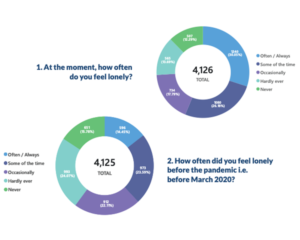
Two questions were included, derived from established measures of loneliness. They asked how lonely people felt in November 2021 and how lonely they felt prior to March 2020, allowing us to compare the rates of loneliness from these two points of time.

What stood out from the results was the sheer volume of people that reported feeling lonely (56%). Even prior to March 2020, the number was still very high at 38%. Over that time there was an 18% shift in people who entered the ‘most lonely’ categories and expanding out from there, a more general shift in loneliness was recorded, even for those who didn’t fall into those ‘lonely’ categories. Overall, 40% of all respondents reported feeling lonelier in November 2021 than they had before March 2020.

The magnitude of loneliness

Deborah explains that, “Loneliness is something that we all experience at some point. It’s a normal human emotion, although it’s not one we often talk about. Obviously, we’ve seen much more of it during the pandemic.”

“Loneliness in its chronic form – when it goes beyond a time of 12 months or more – that’s when we begin to see it impacting on physical and mental health. Some people experiencing chronic loneliness will experience depression, they may have physical symptoms that are unrelated to underlying health conditions. This explains why you see more people who are chronically lonely attending GPs and having tests when there’s nothing clinically wrong with them.”

“In this chronic form, it’s a really difficult thing to recover from. We see people losing confidence, their self-esteem plummets. That in turn impacts on their ability to interact with other people, they become more fearful of rejection.”

The key thing to remember is loneliness is something that everybody experiences, it’s perfectly normal. It’s nothing to be ashamed of.

Dr Deborah Morgan

“You can recover from it, you just might need a little bit of help. We have a role to play ourselves because if we talk about our own experiences of loneliness, it will reduce that stigma, which in turn will help people recover.”

The difference between loneliness and isolation

These two phenomena are often conflated – and Deborah wants us all to know the difference.

“Loneliness is when there is a mismatch between the quality and the quantity of the relationships we’d like to have and those we actually have. It means somebody could have a small social network and never be lonely because that network meets all of their needs. Whereas somebody could have a huge network of family and friends and still experience loneliness because the quality of the relationships is not what they’d hope for. In contrast, social isolation is when you have an absence of a social network or a very small social network.”

Are we serving our younger residents?

Across the Resident Voice Index™ studies, those under 35 have reported more negatively than other age groups for all measures. In the Neighbourhoods & Communities survey they were the least likely to report feeling safe, feeling like they belonged to their neighbourhood or to care about being involved. In the latest survey, a similar trend emerged, where they reported as less resilient, less optimistic, and lonelier. In terms of loneliness, the shifts of the under 35s into the ‘lonely’ categories and the general shift in loneliness was more pronounced.

For Deborah, that wasn’t a surprise, “When looking at loneliness across the population, there is a U-shaped distribution with prevalence high in younger and older people. There are significant numbers of transition points at both stages of the life course that will influence and increase the likelihood of people being lonely. But that doesn’t mean people in the middle won’t experience loneliness.”

Places to meet, places to breathe
Administrations, such as local governments, planners and housing providers have a part to play. The built environment can help prevent people from becoming so lonely. A trend from the residents that took the survey was a desire for more green spaces. These are spaces where people can interact with nature and bump into one another, building connections, like chance encounters on a park bench.

The quality of environments could go a long way in facilitating connection, delivering high-quality environments where people want to spend more time. Deborah’s recent work has explored this topic. She has been, “Looking at low carbon homes; both new build and those being retrofitted. We also measured loneliness and isolation. People seemed to be much more likely to engage with neighbours in a new home than they were in an existing one.”

“Additionally, because everyone in the new builds was in the same boat, having moved in at roughly the same time, they were able to build those connections with one another. They set up WhatsApp group sharing, they’ve got to know their neighbours.”

Work done by Ade Kearns in Glasgow studied loneliness in very deprived areas, looking at people’s trust in the neighbourhood and trust in their neighbours. The built environment can send out implicit messages about a place, for example that ‘it’s not safe’.

Stemming from Wilson and Kelling’s 1982 ‘Broken Windows Theory’, the Glasgow study found that seeing broken streetlights, lots of rubbish, or graffiti sends a message that your neighbours aren’t to be trusted. “A poor built environment makes people fearful; residents don’t necessarily want to go out and spend time in any available communal space. Whereas, if you live in a much nicer area, where there’s places to sit and chat, adequate lighting etc you’re more likely to go out and engage.”

For Deborah, a main proposal for housing providers, planners and local authorities was to build high-quality neighbourhoods that design in connections. “When we’re planning new housing estates or redeveloping existing ones these things are really important to think about.”

The Community Support & Life After Lockdown report is out now. Read the full loneliness results alongside discussion of why a high-quality built environment matters here. If you would like to speak directly to MRI Software about getting involved with the Resident Voice Index™ project, contact us at info@residentvoiceindex.com

Finding the right lease accounting solution for the transition

Welcome back to our series of IFRS 16 ‘101’ blogs, aimed at guiding you through the preparation required to successfully transition to a IFRS 16 lease accounting solution in time for 1st April 2022.   

Now that you have collated all your lease data and put it into a suitable format you now need to procure an appropriate system. To do this, there are a few key elements that need to be considered and that is what we are going to be focusing on here in the second blog post.   

Understanding your complexities and requirements

Here at MRI, we understand that there is a vast array of solutions in the market that can assist with the IFRS 16 transition and so deciding which vendor to go for can become quite a lengthy and challenging process. However, it is only when we start to dig deeper into the nuances of the portfolio and requirements that we can begin to understand which system will be the most suitable not only for the immediate transition on April 1st but also continuing for the years to come.   

Some key areas to think about are:   

  • IFRS 16 audit reporting – the ability to audit your disclosure reporting is a requirement.  
  • Index leases  
  • Intra-UK Government Agreements – where there is not a legally enforceable agreement, but it is defined under IFRS 16 for the public sector. 
  • Peppercorn leases – leases for which the consideration paid is nil or nominal. 
  • Non-standard financial periods – anything other than calendar month.  
  • Complex payment frequencies – English and Scottish quarters.  
  • Master lease agreements – for vehicles and equipment leases.  
  • Sub-lease accounting  

These may not be things you have thought about so beginning to understand these early in the process is key as it shapes how you approach this process. 

What this will look like for your organisation

Another factor that needs to be taken into consideration is the functions that are involved. Of course, the finance team will be influential in running the IFRS 16 calculations but what about other departments? The property team, for example, may not seem like a necessary party to bring in here but what needs to be remembered is that the data needed for IFRS 16 reporting comes directly from this team.    

From our years of experience handling hundreds of IFRS 16 transitions in both the private and the public sector we have seen first-hand how important it is to have cross-departmental collaboration throughout the entire process. A trend we have noticed is that those that continue to adopt a siloed approach have difficulties when it comes to reporting due to delays and inaccuracies in the data.   

Having an IFRS 16 software system that can facilitate this will put you in a great position to maintain compliance with the new lease accounting standards. The data on which the finance team is reporting is the exact same data that the property/estates/asset team(s) have been inputting, tracking, and managing on a daily basis, meaning you can be confident that the calculations are accurate and reliable for IFRS 16 reporting.    

Whichever solution you pick needs to be able to handle all the complexities your portfolio may have. as well as allow for streamlined collaboration across the organisation – only then can you be fully prepared for the upcoming transition.    

To learn more about how technology can help you prepare for the IFRS 16 lease accounting transition, watch the webinar here 

5 types of hybrid work schedules for your business

Two years into the pandemic, businesses across North America are in various stages of returning to the office, but employees are still expressing reticence when it comes to working full time in a traditional office environment.

Considering that a recent survey indicated 52% of North American workers have health concerns about reporting to the physical office space and 78% voiced a preference for some remote work, a hybrid work model would seem to be the best option. But with so many varied preferences, how can employers provide flexibility while also ensuring workplace safety and security for employees?

When it comes to hybrid ways of working, there are five main types of hybrid work models that your business could choose from:

  • Remote-centric
  • Office-centric
  • Split week
  • Week by week
  • Choose your own hybrid

Remote-centric: The hybrid work schedule for go-getters

A remote-centric hybrid work schedule is one where employees are remote-first with the option to come into the office at their own discretion. For organizations whose workers might have gotten used to the fully remote days of the pandemic, corporate occupiers can stick with this schedule to give employees more freedom when it comes to choosing which environment they find most productive.

This schedule caters best to workforces that prefer remote options, but in order to keep a physical workplace open for those who want it, employers may need to reassess their space usage on an ongoing basis. With the right technology, managing and tracking space requirements can help businesses save money on utilities and provide an office environment that changes alongside the business.

Office-centric: The model for collaborators

An office-centric hybrid work schedule is one where employees commit to working in the physical office for most of the time, with some remote options available. This setup works well for businesses that occupy smaller workspaces and whose employee base expresses a great desire to work in-office on most days.

While this model of hybrid work looks closest to the traditional workplace people left behind in 2020, visitor management solutions and hotdesking tools can enable occupiers to meet the needs of employees who want to return in full while still remaining compliant with any local health requirements.

Split week: For the teams that work best together

The split week model of working involves scheduling different teams to gather in-office on different days of the week. Implementing this model is a good way to bring each individual department back into one collaborative space while still supporting remote work options.

In order to make this transition work best, occupiers can empower employees to coordinate with one another and schedule in-office time together by leveraging desk reservation technology. Employers can also take advantage of the reduced space usage to assess their utility needs and make informed decisions when it comes to their in-office requirements.

Week by week: For the business that needs occasional catch-ups

In this hybrid work schedule, employees come into the office for one week to perform certain duties that are best done in-person and then return to remote work for another few weeks. Implementing this schedule allows employers and their workforces to “sync up” on important tasks on a monthly basis while still empowering employees to work in the environment that suits them best 90% of the time.

Enabling this type of hybrid work will help foster a sense of community that can drive productivity in a workforce while still cutting down on utility usage. For occupiers, space scheduling and space management software solutions can go a long way in making this model feasible.

Choose your own hybrid: To meet the needs of all

While the previous schedules rely on internal feedback from a business’s employee base, a “choose your own hybrid” work schedule is one in which employers provide a menu of hybrid options to their employees and allow them to choose which one they find most efficient.

Enabling employees to work in a hybrid environment at their discretion may seem like a hands-off approach, but for bigger organizations with large workforces, this model could be exactly what the business needs to thrive. With the help of presence management tools, employers can still always maintain control over their workspace by monitoring who’s on site.

As hybrid work schedules remain a hot topic, it can be easy to forget that each decision an occupier makes can have an impact on the lives of their employees, and by extension, the productivity of their organization. By taking the time to properly assess each possible hybrid work model, gather feedback from employees, and consider the software solutions that could help you enact each model, your business can make informed decisions and prepare for the future of the workplace. Learn how a suite of workplace management solutions like MRI Workplace Central can enable your business to implement the best hybrid work model for your needs.