

Smart buildings need smart decisions, and smart decisions start with connected data
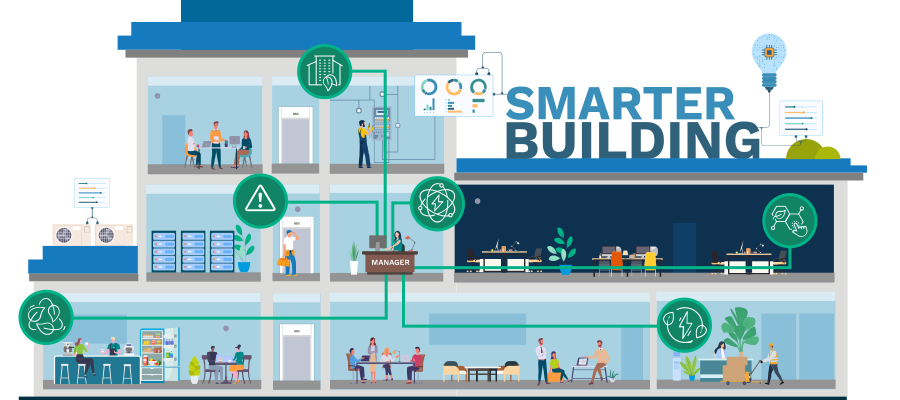
The term “smart building” has been part of our industry vocabulary for years. Yet in many commercial environments across the UK, smart still too often means siloed. A building management system here – a people counting solution there – energy data sitting in a spreadsheet – and access control running on another platform entirely.
Individually, each of these technologies has value. But without connection, context and clarity, they rarely deliver the transformational outcomes that owners and operators are seeking.
For smart buildings to live up to their promise, they must move beyond isolated technologies and towards unified intelligence.
At MRI Software, we see this shift happening rapidly. Rising energy costs, tightening ESG expectations, hybrid working patterns and pressure on operating budgets are forcing organisations to ask sharper questions of their estates. Which spaces are genuinely needed? Where is energy being wasted? How can we balance occupant experience with cost control?
The answer lies in connected data.
From assumptions to actionable insight
For many organisations, decisions about space utilisation and energy management are still based on assumptions. Facilities teams may have a sense that Fridays are quieter. Finance teams know energy bills have increased. HR understands hybrid working is here to stay.
But without accurate, real-time insight into how buildings are actually being used, these remain educated guesses.
Smart buildings change that dynamic. By combining energy management, footfall analytics and people presence management within a single ecosystem, organisations gain a clear, evidence-based understanding of how their spaces perform.
For example, advanced AI-enabled footfall counters can provide granular insight into how meeting rooms, floors or entire buildings are used throughout the week. When that occupancy data is aligned with real-time energy consumption, patterns quickly emerge. Are you heating and lighting floors that are effectively empty on Mondays and Fridays? Are specific zones consuming disproportionate energy relative to usage?
When insight replaces instinct, savings follow.
Energy efficiency as a strategic lever
Energy management is no longer a back-office reporting function. It is a strategic imperative.
Organisations across the UK face volatile energy pricing alongside mounting pressure to demonstrate measurable progress against sustainability targets. Yet many still struggle to translate raw consumption data into clear, actionable steps.
A connected smart building approach addresses this gap. By linking IoT sensors, sub-metering and building systems into a unified data hub, energy consumption can be visualised in context. Spikes and anomalies are no longer hidden in monthly invoices; they are identified in real time.
Crucially, when energy data is overlaid with occupancy insight, organisations can implement intelligent controls. If a particular floor sees low attendance on certain days, lighting, heating and cooling can be reduced automatically. If meeting rooms are booked but not occupied, systems can respond accordingly.
We have seen this deliver tangible results in MRI Software’s London headquarters; integrating energy management with occupancy analytics has generated annual savings of more than £33,000, reduced energy consumption by 23.5%, and cut over 100,000 kWh per year which is equivalent to nearly 20 tonnes of CO₂. These are not marginal gains; they’re material improvements to both cost base and carbon footprint.

MRI Agora IoT Hub - Smart Buildings
Transform your building to a smart building with connected IoT technology
Presence, protection and productivity
Smart buildings are not only about efficiency. They’re also about experience and safety.
People presence management solutions now enable organisations to maintain real-time visibility of who is on site, from employees to visitors and contractors alike. Digital sign-in processes, tailored alerts and automated compliance workflows improve both security and operational flow.
In a hybrid working world, this visibility has broader value. It supports fire safety compliance, improves evacuation planning and reduces administrative burden on front-of-house teams. It also reassures employees that their workplace is managed proactively and responsibly.
When presence data is integrated with energy and utilisation stats, organisations can make more holistic decisions about space configuration, cleaning schedules and service provision. Cleaning teams, for instance, can be deployed based on actual usage rather than static schedules, delivering further cost efficiencies without compromising standards.
The IoT hub: Turning data into intelligence
The true power of smart buildings lies in how they’re orchestrated.
An integrated IoT hub acts as the heart of the building, bringing together data streams from energy systems, footfall counters and presence management tools into a single, accessible dashboard. Over time, this unified data set reveals trends and behavioural patterns that inform long-term estate strategy.
This is where smart buildings become intelligent buildings. Rather than reacting to issues, organisations can anticipate them. Rather than managing space reactively, they can shape it proactively. Portfolio decisions, from consolidating floors to reconfiguring layouts, are grounded in evidence, not anecdote.
A smarter path forward
The UK built environment is at a crossroads. Economic pressure is sharpening the focus on cost control. Environmental responsibility demands measurable decarbonisation.
Employees expect flexible, high-quality workplaces.
Smart buildings offer a route to reconcile these priorities but only if they are approached as connected ecosystems rather than a collection of gadgets.
The future of our workplaces will not be defined by how many sensors we install, but by how effectively we harness the data they generate. When energy management, occupancy analytics and presence management work in harmony, buildings become dynamic assets that respond to real-world usage.
Smart buildings are now seen as a strategic capability, and in a market where every kilowatt, every square foot and every operational pound counts, that capability is fast becoming essential.
MRI Smart Buildings Brochure
A connected approach to maximise your spaces, increase productivity and reduce costs Managing commercial spaces today is more complex than ever. With hybrid working, rising energy costs, and pressure to meet sustainability goals, making data-driven d…
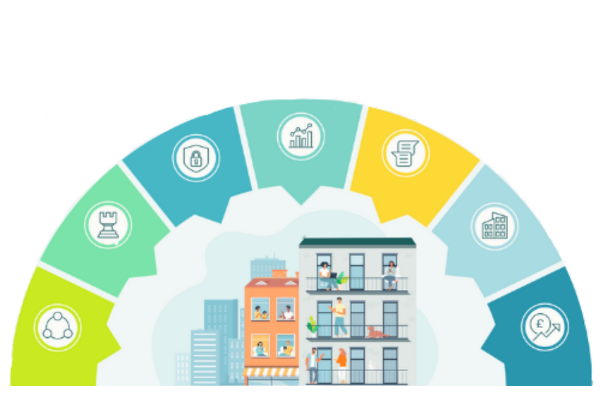

MRI Agora IoT Hub - Smart Buildings
Unlock automation, insights and efficiency through our AI-powered IoT Hub for smarter building and asset management.