7 biggest property management challenges

As a property owner or manager, you likely already understand all the pains and gains that come along with this challenging yet rewarding position, especially if you don’t have a comprehensive property management solution. However, no matter how many years of experience you have, and how much you’ve scaled your business, every property manager faces the same issues at some point along the timeline.

Maybe you’re starting to ask yourself questions like:

  • How can I be a better property manager?
  • Why do I never have time?
  • What am I missing?

If this is the case, there’s something you need to know. You could be subconsciously adding to your workload.

In today’s digital environments, adopting software is a must, and allows you to adapt to the increasingly complex demands of the market. When you’re reluctant to take the leap and invest in comprehensive property management software, you actively add to the list of issues you face.

What challenges do property managers face?

The common property management challenges

From keeping up with general maintenance of a building right through to financial administration, your ability for project management is constantly put to the test. The success of your business ultimately comes down to your communication skills, and, if that wasn’t enough pressure, you constantly have to keep track of what’s going on.

When you start to grow, it’s a cause for celebration. But soon, more and more property management issues start to arise. Here are just a few of the most common challenges you’ll face.

Property management challenge 1: Employment

When you start to scale, it becomes impossible to organize everything on your own. You have to hire and retain high quality staff members who can help fix your property manager challenges, rather than adding to them.

Property management challenge 2: Maintenance

As if owning and renting buildings wasn’t enough, maintenance is one task on a property manager’s list that never seems to diminish. When one job is finished the next is there, ready to demand your time and attention.

Property management challenge 3: Tenants

Alongside looking after your real estate assets, you have to look after the people. A big portion of your work is:

  • Finding reliable renters
  • Conducting background checks
  • Signing Rental Service Agreements
  • Accommodating client requests
  • Communicating with relevant contractors
  • Fixing issues as and when they arise

In addition to this long list of duties, tenants always need to know what you expect of them. When issues arise, you have to enforce evictions, which can be a messy process.

Property management challenge 4: Admin

Any business owner will proudly proclaim that admin is the bane of their existence. So why do they insist on continuing to put themselves through it? As a property manager, you likely have thousands of different pieces of paperwork spread across multiple devices.

Property management challenge 5: Scaling

And, when you have so many tasks that need completing, scaling your revenue seems like a distant dream. In order to encourage client recommendations, you need to provide them with the best service possible, but you can’t do that without getting on top of your task list. It’s an endless cycle.

Property management challenge 6: Time

Every property manager will agree: there’s never enough time in a day. Either you’re desperately trying to catch up on yesterday’s work, or you are falling further and further behind.

Property management challenge 7: Costs

One of the hardest challenges a property manager faces is the growth of the subsequent costs that come from accepting additional projects.

Contractors need to be paid, tenants continue to complain, and things slip through the cracks. Pretty soon, you and your accountant are in a disagreement and your profit margin is on the decline.

How investing in property manager software can help

It isn’t all bad news, though.

Despite the numerous property manager challenges, you’re not in this alone. You likely already have staff members helping along the way.

But honestly, how many times have there been miscommunications, lost papers and files, or data entry errors that have hampered productivity and slowed progress on projects?

If you are not already, start looking at software solutions for property managers. With the best program, you can:

  • Increase your efficiency: Innovative property management software can automate manual processes, save time, and increase productivity for your organization.
  • Track each of your properties: A centralized system allows you to keep information in the same place so you can easily track which properties are making money, and which ones aren’t.
  • Receive alerts on tasks that need completing: To stop yourself from falling behind, MRI’s software addresses property manager issues like miscommunication and a lack of planning and control.
  • Build relationships between your employees and clients: When you’re able to easily reach out to relevant stakeholders, you can respond immediately to queries and build trust between yourself and the people who rely on you.
  • Improve tenant satisfaction: To maintain occupancy, your tenants need to be reassured you are meeting their every need. Property manager software can help.

Realistically, we as humans make errors. No matter how hard we try, we’re imperfect beings and it’s just what we do best. Unfortunately, real estate and property management is a very “survival of the fittest” world, especially with the economy the way it is.

Embracing property management software can help you stop wasting resources and scale your revenue. Take advantage of smooth working processes from the front to back office through easy-to-use client dashboards, automated finances, insurance tracking, AI-powered lease abstraction, and streamlined accounting.

Using property management software to reduce property manager issues

Property management challenges – FAQs

Are you still hesitating? It’s normal to have questions when you’re considering a structural overhaul of how you run your property management business.

After all, won’t adopting property management software just add to your to-do list?

Absolutely not. Let’s take a look at why with these FAQs.

Why do property management companies fail?

The main cause of property management failure is an inability to deliver on the promises made to tenants. Relationships get damaged, and businesses start to get a bad reputation, though it’s often not their fault. Property managers get so caught up in their extensive day-to-day to-do list that they can’t focus on what matters: delivering excellent service.

What does property management software do?

Property management software can aid you in delegating, automating, and organizing tasks. In just a few seconds, you can pull up rental agreements and check maintenance requirements to keep everyone happy. But there’s more. Everything from the accounting process, online rent payments, and preventive maintenance can be built, established, and managed all through this one system.

Is property management software useful?

Yes, incredibly so. Many software platforms will address the direct problems that property managers face, allowing them to be more productive with their time. Using property management software, managers and owners can systematically and efficiently run their business.

Can property managers work from home?

Only when they embrace a digital-first business model. Cloud-based property management software can allow managers to communicate easily with their employees and tenants and enjoy days off with their family and friends.

What MRI Software can do for you

Efficiency isn’t just handed to you as a reward for working hard.

If you don’t dedicate time and attention to upgrading your work processes, you’ll never be working as effectively as you could be. Mistakes will continue to be made, and you’ll encounter common property management challenges again and again.

Instead, seize the opportunity that lies before you: MRI’s incredible property management software.


Find quality tenants for your multifamily property

It’s easy to keep costs low when you have sensible renters that care about their residence, adhere to your agreement, and are happy to do minor maintenance jobs for you.

But how do you find good tenants? Where do the best ones spend their time? Let’s take a look and find out.

The importance of finding good tenants for multifamily properties

When it comes to managing a profitable multifamily property, occupancy rates are key.
Tenant turnover can cost you an arm and a leg, so managing their experiences is in your best interest – and this starts right from the moment they start hunting for properties.

If you can make the best first impression with your professionalism, you put yourself in a great place to encourage good tenants to make a long-term commitment that will result in a consistent cash flow for your business.

However, raising the number of quality people applying for your property doesn’t just happen overnight. There’s some homework to do.

How to find good tenants for rental properties

Step 1. Optimize your website

It is surprising how many sites out there are not mobile and tablet device ready, and, if this is the case for you, you are:

A. Alienating a significant portion of your audience.
B. Ignoring one of the best places to find tenants.

According to recent research, over 92.4% of internet users are on a mobile device, which means, in order to generate their interest in your multifamily property, you have to accommodate their needs.

Step 2. Build your traffic

When people have questions these days, we go to Google. With that in mind, how impressive is your search ranking? If you have to actively go through seven to ten pages before coming close to finding your property using basic company-linked terms (if not your property’s name in general) then you need to work on your SEO.

Step 3. Increase your online presence

When it comes to finding good tenants, it seems pretty apparent that social media is a major time consumer for many people. So, it makes sense to go where your audience is. Having a social media page gives potential customers a chance to get a better “feel” for what you have to offer.

Step 4: Manage social proof

Another tip for finding tenants is to actively monitor and respond to what people are saying about your property on product/company review websites. These sites not only let you into what potential residents are learning about your property, but they can also give you an insight as to what your current residents actually think about you.

Step 5: Empower your residents

Once you are up-to-date with today’s digital environments, it’s time to make your services as accessible as possible with multifamily property software (a tool that allows you to control tenant experiences to stimulate referrals). Finding tenants online is a lot easier when your current renters are leaving you positive reviews.

Creating the best tenancy ad for your multifamily property

Wait, there’s more.

Alongside the internal strategies you can execute to find good tenants, you can expand your marketing through either PPC ads (like ones on Google) or partnerships with various listing services in your area.

Despite the cost involved, both of these have been proven as two of the best ways to find tenants for rental properties. Before you can begin, though, you need to make sure the ad you want to use is:

  • relevant
  • eye-catching
  • informative

Tip 1 for finding tenants: Take clear pictures

To capture the attention of prospective quality tenants, your ad should include comprehensive and accurate images of the property you are listing. Too often, landlords provide inadequate photos that stop any tenants with good intentions from asking for more information. How can they expect you to deliver on your promises and look after their personal safety with building maintenance if you can’t even take the time to take a few photos?

Tip 2 for finding tenants: Write detailed descriptions

The best ads are clear, extensive, and authentic. You should write a detailed summary of the property (such as the size and number of bedrooms/bathrooms) and could even include some information on the surrounding area (such as how the property is a five-minute walk away from the shops). These details are going to intrigue potential tenants and increase your number of queries.

Tip 3 for finding tenants: Set your rental price

No matter what property you are listing, and where, there’s something you need to do before you list your ad: always decide on your rental price. The last thing you want to do is waste time responding to people who don’t have the budget for the property you’ve listed and risk upsetting them as a result. This can damage relationships, decrease your efficiency, and stop you from finding good tenants.

Tip 4 for finding tenants: Widen your tenant pool

Targeted ads don’t necessarily have to be restricted to the exact area your property is in. You could consider widening the zone of your listing and therefore increase your chances of finding a good tenant online. You never know, perhaps someone will ask about one multifamily property of yours only to end up viewing multiple.

Tip 5 for finding tenants: Always screen your potential tenants

If you want to make the most of your multifamily property, then you need renters who are going to pay you on time and take care of their space. When it comes to finding good tenants, you should always:

  1. Look at their property history: Previous landlords they have rented from are likely to be able to provide a review on the quality of the tenant. This can also help you avoid property management fraud.
  2. Request a guarantor: Where applicable, it is entirely appropriate to request a guarantor for young or financially unstable tenants.
  3. Analyze their employment/income stream: Great tenants will have long-term employment history and have stayed in the same job for more than six months. They would have a decent credit score, and not have too much debt.
  4. Take a deposit: A deposit is not only a multifamily property best practice, it’s a necessity for finding good tenants. Being able to pay money upfront shows their financial management skills and ability to save.

How to find good tenants for multifamily properties – FAQs

As you can see, there are numerous ways to find good tenants. If you still aren’t sure, browse these FAQs.

How long does it take to find a tenant?

Properties tend to start getting responses within the first few days of a job listing; however, it may take you longer to screen the reviews and decide which tenant to accept. Therefore, you could be looking at a timeline of anywhere from a week to several months.

What qualifies as a multifamily property?

Multifamily properties can include apartment complexes, a duplex, and even condos. Essentially, it’s any building that has a full set of facilities to sustain more than one family.

What qualities make a good tenant?

A good tenant would be respectful of the property they live in and their neighbors, pay their rent on time, be willing to do minor maintenance jobs, and have great employment and address histories.

What are the positives and negatives of a multifamily property?

For managers, multifamily properties can induce more complaints than most. If neighbors aren’t being respectful of each other, you’ll be the one to have to deal with issues. However, due to the nature of multifamily properties, they are often highly profitable.

How multifamily software can help you find tenants online

There’s one more tool you can use to find tenants for your rental property – multifamily property management software.

Capable multifamily property management software can help you build your website and its usability, but can also encourage engagement with your community.

Functions like:

  • unit availability and apartment reservations
  • prequalification applications
  • lease agreement distribution
  • online bill payments
  • digital lease renewals with electronic signatures

All work together to ensure you are creating an accessible and enjoyable tenant experience.

When used correctly, you can create a positive brand reputation that leads to a successful word of mouth marketing strategy. As one of the best ways to find tenants, multifamily property management software should not be ignored.

Reach out to MRI for a demonstration today.

8 tenant retention strategies to boost resident retention

Achieving strong tenant retention rates is a goal on every property manager’s list.

Sadly there is no golden answer on how to convince your tenants to stay with you – but there are proven strategies that you can start to implement.

How to Retain Tenants: 8 strategies to boost tenant retention.

Why is tenant retention important?

Any business development site will tell you that it’s five times cheaper to keep clients than it is to generate new ones, and this same concept applies to residential property owners/managers and their tenants.

By building a tenant retention plan, you can decrease your cost per acquisition, build a consistent income, and continue to scale your revenue, risk-free.

Calculating your tenant retention rate

Tenant retention rates are calculated much the same way as any user rate.

1. First, total how many tenants you have at the start of a period.
2. Second, total how many tenants you have at the end of a period.
3. Divide the second number by the first.
4. Multiply this by 100 to get your % tenant retention rate.

For example, if you had 120 tenants at the start of June, and 110 tenants at the end of June, you’d do (110/120) = 0.92.

Then, when you multiply this by 100, you’d discover you have a 92% tenant retention rate for that month, which you can compare with the year previous.

Additionally, to gain extra insight into which properties are a good investment, you can calculate average tenant retention for each individual apartment block, retail site, or office building you manage over a period of time that makes sense to you.

What is a good tenant retention rate?

For residential properties, you should aim to retain 60% of your tenants (slightly above the national average of 48%).

This means, out of the 120 tenants you had in June last year, you’d still have 72 of the same individuals renting the same property.

For retail/commercial properties, you want to aim a little higher. A retail tenant retention rate should be around 70%, as businesses tend to stay in one place for significantly longer than residents. However, if they are growing successfully, they’ll eventually save a deposit for their own space and move on.

How to retain your tenants: 8 proven strategies

It’s idealistic to assume that all your tenants will stay with you. In general, residential clients leave because they:

  • want a better or bigger home
  • are relocating for a job
  • found a cheaper price elsewhere.
  • moved to be with family
  • have saved enough to purchase a property.

This sometimes means that retaining tenants is completely out of your control. You need to focus on what you can influence, rather than what you can’t.

1. Incentivize lease renewals

When you are rapidly approaching a lease renewal period, you need to consider how you can convince your tenants to stay with you. This may include offering rental discounts upon a successful renewal or even agreeing to previous requests they have made (such as permission to have a pet).
No matter what, provide them with a reason to stay, and you’ll be positioning yourself for a lower tenant turnover.

2. Be responsive and maintain good communication

In today’s digital world, we can assume that tenants are best friends with technology. This means they’ll be expecting almost-instant communication and will want to be able to reach you either by phone, email, your website, and social media.

3. Keep rental rates fair and consistent

It can be tempting to increase and decrease prices according to the market.

However, you can improve your tenant retention rates by charging a consistent price. This way, clients can budget accurately and will be more willing to stay at your property.

4. Prioritize maintenance

It’s impossible for a tenant to feel safe and secure when the building they are renting is falling apart around them. Standard maintenance should always be a priority on your to-do list, and not an afterthought.

5. Be flexible with good tenants

Tenants who have proven themselves as reliable individuals should be granted a little bit of leeway every now and then.

For example, you could:

  1. Allow them to paint the walls (as long as they repaint when they leave).
  2. Make exceptions for late fees caused by ill health or personal circumstances.

By being an understanding property manager, you are more likely to retain tenants.

6. Take tenant feedback seriously

Admit it. As humans, we’re bound to make mistakes.

When your tenants are complaining, or, at the very least, providing feedback, be sure to listen, take their advice to heart, and try to do better.

They might be upset that you accidentally booked a fire alarm drill for seven am on a Sunday morning, for example, rather than the usual Monday. When this happens, be proactive with taking responsibility for what has happened and apologize.

7. Pre-screen all tenants

Tenant retention isn’t simply about being the best property manager you can be. It’s also about choosing the right tenants and making sure they have decent intentions.

Look at their credit score and address history, and ask them how long they want to rent your property. If you keep onboarding tenants who only want to stay for six months, this is one quarter of the national average, significantly impacting your tenant retention rate.

8. Facilitate community building

The Wall Street Journal interviewed successful apartment owners on social media; these owners believe that tenants who make friends are more likely to stick around for another lease term or two. This idea of friend and community building is a key aspect for property owners and managers to retain tenants.

How to retain tenants

Retaining tenants ultimately comes down to their experiences and how you treat them.

Whether you run commercial or residential properties, it’s likely each person spends significant portions of their day in the unit they rent. When they don’t feel supported when things go wrong, or they don’t believe you have their best interests at heart, they aren’t going to renew their lease.

How to retain tenants in a difficult market

Tenant retention rate – FAQs

Tenant retention isn’t an easy concept to wrap your head around. Here are some FAQs to help you understand.

What is the average retention rate for a tenant?

The average tenant will stay in a property for around 25 months (or, just over two years). This brings the average tenant retention rate to around 50%.

What is a tenant retention rate?

Tenant retention refers to the sum of how many tenants stay with you over a period of time, for example, June 2021 to June 2022.

How do I get rid of a bad tenant?

Evicting tenants is never an easy process. You can consider raising the rent so they’ll leave naturally, pressing charges for damages, or simply asking them to leave. Typically, if they reach the end of their lease, you can then start an eviction through the courts.

How do I increase my commercial tenant retention rate?

Commercial tenant retention is a little tricky. The main cause of them moving to a new property is because they need a bigger unit or have gone out of business. Listen to their concerns, and consider offering cheaper alternatives if needed. For other ideas, read our blog on commercial tenant retention.

How can I communicate with residential tenants?

It’s important to put a system in place for property managers and tenants to efficiently communicate with each other, otherwise information can get lost and requests go unfulfilled. Residential properties that use tenant communication software can easily manage all interactions with new leads and residents through different contact methods – phone, email, text, web chat, and more.

How can I automate the lease renewal process?

Offering a quick and easy way for residential tenants to renew their lease can increase tenant satisfaction, improve retention rates, and streamline the property management lease renewal process. Electronic signature and storage tools that keep all your lease documents organized and secure can simplify the renewal process for residents and property managers.

Retain tenants with MRI’s property management software

Looking for ways to boost your tenant retention rates?

Our property management software has an intuitive Tenant Connect client dashboard that allows tenants to easily file maintenance requests and renew their lease when the time comes.

It’s an easy-to-use platform designed to foster strong relationships between yourself and your clients.
Trial our services today.

What is a rent roll? – Insights into your rental property income

Purchasing investment properties can be a risky venture when you don’t have all the information to hand. Details can be missed, and you could end up buying a building that’s more trouble than it’s worth – with high delays in rent payments and the frequent, costly maintenance required to avoid tenants suing for safety issues.

A property’s rent roll is meant to counteract blind decision making when you are looking for profitable investments and has been used in real estate for years.

What Is a Rent Roll?

A rent roll by definition is a management tool that details properties, displaying legally required lease information and helping landlords track start and end dates of contracts, rental income by property, and even annual increases. A property’s rent roll can also help building owners/overseers process and track recurring issues.

What Is the Purpose of a Rent Roll?

Rental properties are increasing four times faster than incomes. With so many real estate companies handling multiple buildings, they needed a quick and easy way to review data.

When rent rolls were first developed, the system was a revolutionary concept that reduced the element of risk in purchasing properties.

A rent roll keeps vital property information in one place, aiding future sales to interested real estate buyers.

How to Predict Rent Roll Commercial Real Estate

Rent rolls aren’t just incredibly useful for property managers, they are also important in real estate. If you’re wondering how, then know this: it helps you calculate good and bad investments.

Say, for example, you wanted to buy a building that consisted of multiple commercial offices for hire. A rent roll report would allow you to delve into the information available to you – such as when each office has been rented, how long for, and any current occupiers who are leasing space in the property that would likely continue renting from you.

How Does a Rent Roll Work?

Still wondering what a rent roll is and how they work? Rent rolls can be produced in a variety of software applications, including manually inputting data into Excel, or utilizing software that does part of the work for you. This collaboration of data allows for easy perusal and informed judgements.

Who Uses Rent Rolls?

Rent rolls are mostly used by property managers, landlords, and real estate investment companies.

They can be bought and sold on the private market to give insight into rental incomes in the area and help buyers judge the quality of a building. Well-maintained older buildings with clear service history listed in rent rolls may still be worth purchasing due to the aesthetic priorities of
today’s renters.

How is a Rent Roll Useful to a Property Manager?

Rent rolls compile the information required to efficiently maintain and look after multiple properties so that important details don’t get missed. Rent rolls were designed with a specific purpose in mind: enhancing the quality of services for tenants and landlords directly affected by the manager’s actions.

How to Create a Rent Roll

Now you understand the definition of a rent roll, it’s time to learn how to make one. A detailed rent roll report would include:

  1. Identifiers: Rent rolls should detail address and contact information first and foremost, as “identifiers” for each property. They could then list details about the area, including average incomes and average property prices.
  2. Unit Information: If the rent rolls are covering a unit, then it’s only useful to a property manager on a regular basis if it details important information about how many flats or offices there are and how much work there is to be done.
  3. Individual Properties: Each individual division should have its own subcategory that lists the number of doors and windows, square footage, bedrooms, bathrooms and other facilities.
  4. Tenant Details: Contractual lease agreements should be tracked at all times, and are an important part of an overall rent roll definition. Any agreements made (such as the rent due date and security deposit information) should be added here, including annual increases according to the rent value of your property.
  5. Rental Income: An annual total rental income will be displayed at the end of a property’s rent roll report.

Altogether, therefore, a rent roll gives a great overview of costs and income – much like any balance sheet – with just a few more details.

It helps property managers stay on top of their workload and calculate the disposable income they have to spend. Rent rolls can work in tandem with a property management software to manage complex priorities and make data-backed decisions.

Rent Roll Checklist for Property Managers

A major cause of burnout among property managers is the bad business that gets carelessly brought into the rent roll for the sake of growth. A big list where nobody pays their debts isn’t worth compromising a smaller but consistent income that allows you to budget accordingly.
When determining how a rent roll is useful to a property manager, we need to take a look at the management properties which are actually worth adding to your overall portfolio. Often, it’s what you say “no” to that will allow your rent roll to succeed.

We interviewed Darren Hunter from Inspired Growth Training, who shared some tips to help you avoid making wrongful decisions and instead grow a profitable property’s rent roll.

1. Annual Contract Value

As a fee maximizer, Darren believes in taking to account your expertise and proven track record when determining your fees and remaining firm in negotiations. If you must give discounts, set an acceptable range that isn’t compromising your needs. “You can’t just be breaking even,” says Darren. How an owner negotiates fees with you is often a tell-tale sign of the quality of the management and the likely future of a property’s rent roll. Difficult owners in most cases are often difficult due to money, according to Darren, whilst owners who share the same values as you (i.e. the type of owners you want) will be more reasonable and will appreciate the true value of managing quality properties.

2. Rent

A rent roll report should list the potential income someone could gain from a property.

“Be wary of low rent properties,” says Darren. According to him, low rent usually means lower property management fees and attracts low-end tenants – both of which you do not want if you are aiming for a profitable earning portfolio. Determine an acceptable price range for rent and avoid going below this benchmark.

3. Location and Distance

As they say in real estate: location, location, location!

Ideally, you would want to avoid suburbs and streets that have notoriously high crime rates. It also depends on the distance they cover and the detail you go into. Longer distances mean higher costs due to the time and expenses required to travel and service the properties. Always keep in mind that a substantial percentage of your rent roll should be located near you.

4. Extreme Landlords

A professional and amicable customer relationship is one of the pillars of a high-quality rent roll.
A property management software can help you achieve this, but equally important is assessing the character of a landlord before bringing them into your business. Be aware of any extreme behavior of owners in relation to financial and emotional motives. These may include:

  1. Unreasonable expectations regarding tenancy laws, repairs, wear/tear, etc.
  2. Not wanting to spend money on repairs.
  3. Requiring cheap fees.
  4. Poor quality property.
  5. Requires rent levels that are unrealistic.
  6. Unreasonable tenant expectations and criteria.

5. Quality of Property

Be wary of buildings in less than reasonable cleanliness, quality and maintenance condition. This will all be clear in a property’s rent roll report. Newer homes don’t usually translate to lower maintenance costs and older structures don’t necessarily mean poor quality. It’s important to always be objective when checking out a property and not be fooled by that fresh coat of paint.

6. Property Structure

To build a high-quality rent roll, you also have to be discriminating in the style and structure of the property to be managed. This usually ties in with the low rent criterion discussed earlier. From Darren’s experience, a profitable rent roll usually doesn’t include older flats and units unless they are in good shape and exceed your desired rent level. In such cases, Darren suggests increasing your property management fees to maximize your income from low-cost housing.

Don’t forget to track and cross-check every detail in a property’s rent roll.

7. Furniture

Furnished properties often require management consent due to complications associated, like wear and tear issues. Ideally, you would not want to manage partly or fully furnished long term rental properties, unless it caters to high-ended executive types.

A useful rent roll starts with keeping a critical eye on the new management you bring into the business.

By setting benchmarks, you can determine the right owners, properties, or tenants that will help you grow an ideal rent roll in real estate – one that everyone can be proud of working in.

Applications to Help Property Management

One document alone isn’t enough to aid property managers and investors decide how to predict changes to rent roll commercial real estate and calculate when action is needed.

MRI offers a range of real estate software to transform the way communities live, work and play. You can manage rental properties, finance, assets, and more.

Reach out if you have more questions like “What is a rent roll?”, or better yet, take a look at what we can do with our no-obligation, free demonstration. Contact us today.

What is facilities management?

Facilities Management is a profession that refers to the integration of physical infrastructures (like technology) and the employees who maintain the safety, security, and efficiency of these systems.

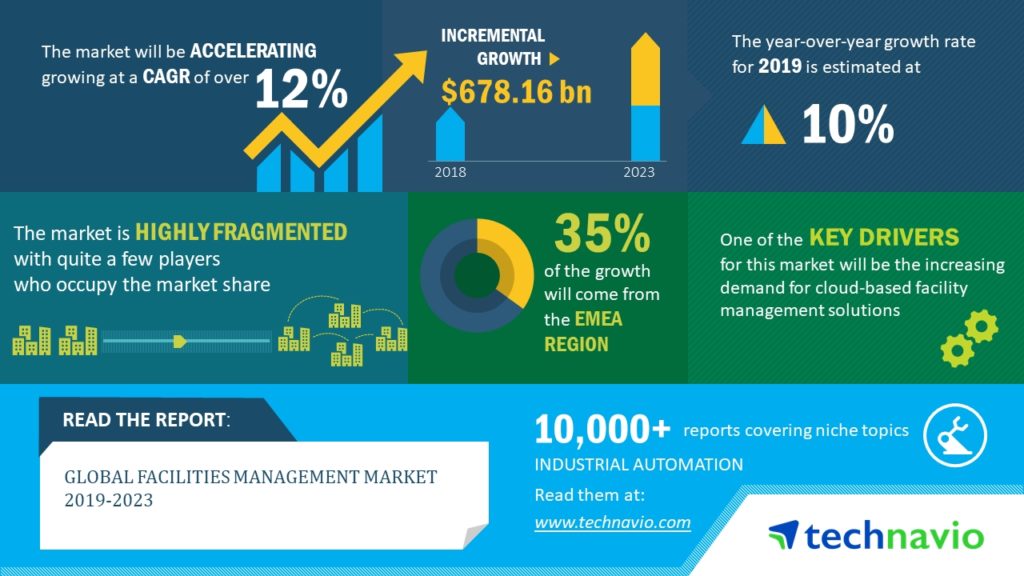
The term was first coined 60 years ago, and, since then, the global facility management market has grown to a value of $1,239.99 billion in 2021 and is even expected to increase a CAGR of 5.7% this 2022.

Global Facilities Management Market Report
(Source: TechNavio)

What Does A Facility Manager Do?

Facilities Managers are “considered strategic executives who are integral to an organization’s ongoing success.” They are responsible for the maintenance of “places of work” (such as offices, retail stores, and warehouses) and ensuring the proper function of business operations.

Institutes of higher learning now offer advanced facility management degrees, and the position has evolved from a “handyman” position into a sophisticated professional management discipline that involves initiative, forethought, and planning.

Not to be confused with property management, facilities management descriptions focus less on the buildings themselves and more on the processes and people required to ensure safety and security. For example, they might organize fire alarm checks on a regular basis and communicate with electricians when needed.

Responsibilities of Facility Managers

In simple terms, building and facilities management is the efficient coordination of all activities related to keeping physical spaces and infrastructures operational; from single buildings to complex campuses used for a range of revenue-generating sites, like retail, manufacturing, and healthcare.

The management of facilities includes making sure each element of a working environment is safe simply by meeting relevant regulatory mandates, conducting frequent maintenance, and reorganizing structural layouts.

This should all be done in a way that promotes productivity and the well-being of every user.

The Role and Job of a Facility Manager

To truly get to the bottom of what facilities management is, let’s explore the two categories of their day-to-day jobs: hard services and soft services.

Hard Services

Hard services are related to physical structures (the parts that can’t easily be removed). Corporate facilities management is sometimes required by law to ensure the health and safety of workers or occupants:

  • building maintenance
  • maintenance of HVAC systems
  • energy and water management
  • elevators and escalators
  • lighting
  • fire safety
  • plumbing and drainage

The role of facilities management, in this case, is to reduce the risk of accidents and disasters, which could then result in hefty insurance costs. Facilities management software is a great option for companies who need to stay up-to-date with repairs.

Soft Services

Soft services are related to keeping the workplace comfortable and secure.

Some of these facility management task descriptions are not absolutely necessary and can be added or removed after quality and budget reviews:

  • housekeeping and custodial services
  • security measures
  • parking lot maintenance
  • pest control
  • waste disposal
  • recycling
  • replenishing furniture and equipment
  • information systems
  • document management
  • mail management
  • space management
  • grounds maintenance and landscaping

The functions of facilities management are often favored by employees to make their lives easier. To prioritize these soft services accordingly, companies can get an overview of their costs through our integrated workplace management system solutions.

What is Facilities Management

Overall, the job role promises a dynamic, challenging, and engaging career for every individual.

What Skill Sets Do Facility Managers Have?

Although Facilities Managers can expect to wear a variety of “proverbial hats”, there are some common skill sets all facility managers require (according to facility management news reporters):

  • Willingness to Learn
  • Digital Competency
  • Problem-Solving
  • Timekeeping
  • Personability
  • Budgeting/Finance
  • Emergency Planning
  • Innovation
  • Leadership
  • Environmental Stewardship

Case Study: Real Estate Facilities Management

A real estate facility manager has lots to pay attention to.

Not only is the industry fast-moving and constantly changing, but there are many minute details that go into selling and investing in houses.
Digital competency, for them, is arguably the most important part of their job – allowing them to reallocate time-consuming tasks from their to-do list.

Property management software would also let facilities managers meet the extensive demands of their sector in an accurate, timely manner.

What is the Future of the Facility Management Industry?

Like almost every industry on the planet, smart technology has accelerated the field of facilities management.

To stay competitive in today’s marketplace, facilities management – whether it is handled internally or outsourced – needs to include a computerized maintenance management system (CMMS) complete with a mobile application.

Cloud-based automated solutions reduce the hours of wasted time spent on manual processes and eliminate downtime that results from human error.

A CMMS can revolutionize work order processes, preventative and predictive maintenance tasks, and the management of assets, vendors and inventory.

Facility management service providers will already be using these tools, and companies desiring smooth-running business operations should consider management software through MRI.

Technology & Facilities Management Companies

To this day, many smaller organizations may prefer to conduct management of facilities internally.

Even so, there are thousands of options for facility management services out there and businesses of all sizes have been growing the facilities maintenance industry – simply by outsourcing a task or two.

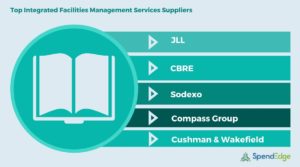
SpendEdge Top Integrated FM Service Suppliers
(Source: SpendEdge)

The burgeoning trend in the industry is to offer bundled building and facilities management. This comprehensive scope of services adds value and drives better quality. The top 10 integrated facilities management companies offer:

  • Leadership
  • Meeting room services
  • Business risk assessments
  • Catering services
  • Business continuity planning
  • Management of vehicle fleets
  • Contract procurement
  • Front-desk services
  • Management of utilities
  • Emergency response

In addition to freeing their own personnel to focus on goals more closely aligned with their core business, companies purchasing facility management services benefit in several measurable ways.

  1. Improved Efficiencies: A single point of contact eliminates duplicate functions, streamlines communication, and enhances workflow processes.
  2. Higher Productivity: Facilities management descriptions include maintenance strategies to prevent breakdowns that often bring production to a halt.
  3. Increased Expertise: The role of facilities management employees is to already have the technical know-how, saving companies from expending unnecessary time and resources on training in-house.
  4. Reduced Costs: In addition to spending less time on training, companies save on staffing, employee benefit, payroll expenses, inventory, and more.
  5. Better Quality Control: With proven systems already in place, facility management services produce consistency and reliability.

How Important is Facilities Management?

Facilities management has become a critical factor in a company’s growth.

According to Gartner, “providing a workspace to an individual employee costs an organization from $8,000 to $14,000 per year.”

Proper maintenance of these spaces can help businesses avoid sudden and expensive costs – and through FM technology, businesses can save a 5% reduction in the total cost of occupancy.

From looking after equipment to creating an environment that supports the company culture, facilities management adds value on a daily basis and for the long term.

High-performing businesses understand the necessity of prioritizing building facilities management. This aspect of their operations and expect facilities management companies to offer solutions based on cutting-edge technological trends.
If you’re not already using an automated solution to manage your facilities, work orders, maintenance, assets, and more… it’s a good place to start.

Here at MRI, we offer intuitive and flexible software solutions to help you transform your organization.
Reach out if you have questions, or better yet, take a look at what we can do with our no-obligation, free demonstration. Contact us today.

Four simple ways to increase multifamily lease renewals

This blog was written by KT Heins-Nagamoto, a content manager at Rhino.

Rhino leverages PropTech to solve renters’ biggest financial problems, starting with the dreaded cash security deposit. Rhino advocates for renter rights in everything the company writes.

Nationwide, the rental market is in full recovery mode. As the initial impact of the pandemic subsides, national vacancy rates in the fourth quarter of 2021 were a mere 5.6%, and economists predict a 7.1% growth in national rent in the next 12 months.

However, the renter migration, fueled by the work-from-home movement and inflation, means that the rental market will get even more competitive. According to Redfin.com, 31% of its millions of users looked to move to another metro in 2021, up from 25.6% in 2019, before the onset of the pandemic. This could spell disaster ahead for resident retention, especially if you’re planning on raising rent.

If you’re looking for strategies on how to boost lease renewals and keep your existing residents in unit: look no further.

1. Notify your residents if you’re raising rent

A simple courtesy (and sometimes a legal requirement) is to notify your residents 30, 60, and even 90 days before their renewal date that you’re raising the rent. And we’re not talking about making your leasing teams or property managers do it manually.

Thoughtful email marketing allows you to craft a universal message that is both legally sound and personalized. In your email, you’ll want to clarify the percentage you’re raising rent, offer an explanation, and invite residents to respond.

Pro tip: Be certain to set a cadence of communication with your residents via weekly or monthly newsletters. Then this kind of outreach will become expected and will generally get a more favorable response.

2. Upgrade your rentals with the basics

For large portfolios, it can be difficult to roll out major amenities, especially post-construction. Lucky for you, we’re not talking about breaking ground on an onsite dog park. The modern renter wants amenities and upgrades that are coincidentally easier for landlords to roll out across their portfolio.

Amenities such as free WiFi, in-unit laundry, heat and air-conditioning, and smart home tech give renters more control of their rental unit environment. All these skyrocketed to the top of in-demand upgrades for millennial renters when the pandemic hit. As many renters continue to work from home, these conveniences have evolved into necessities. Plus, by adding a few upgrades to the unit, you can provide an explanation for the rising cost of rent that your renters will see as understandable. These practical renovations can also boost rental value in the long run.

3. Automate the lease renewal process

Cash, checks, screenshots, faxes, email; some owners still rely on outdated methods to renew a lease. These can come with security risks, or at least introduce unnecessary friction to the lease renewal process. The easier it is for a renter to renew, the more renewed leases you’ll see.

Automating the lease renewal process from your platform management system can help you securely re-sign renters with little engagement from your busy leasing or management teams. For example, MRI Living provides residents with a simple online experience through a branded multifamily resident portal which can be used to automate and facilitate communications about renewals, securely house renewal documents, and take, track or refund any payments.

4. Offer security deposit insurance at renewal

Security deposit insurance, offered through Rhino, is a great way to help you improve your retention rates. Think of it as another potential amenity to offer renters.

Rhino security deposit insurance replaces cash deposits and can be used to cover losses from unpaid rent or damages. If a renewing renter purchases an insurance policy through Rhino, they will agree to a small, non-refundable fee to pay for the policy, and the original cash deposit can be refunded, either in cash or as a rent credit. Even better, renters who use Rhino report higher satisfaction with their property owners.

To learn more about how Rhino can help you boost your lease renewal rates, get in touch.