What experimentation with AI reveals about how the real estate industry is transforming
I recently read an article published in Property Week written by our very own Chief Innovation Officer, Nihar Malik. In it, he charts how sustainable competitive advantages from artificial intelligence (AI) in real estate will be created, and where the proptech trends are heading. It really got me thinking, as everything about AI seems to do now.
Asking the right question first
Many stakeholders may be asking the wrong question when it first comes to using AI in real estate. Nihar’s article makes a strong point in this regard. Organizations tend to start with: “Where can we use AI?”. That’s fair, but the better question might be: “Which business processes would AI gain the most value from becoming smarter, faster, or more autonomous?”.
This distinction is important because AI only becomes transformational when it’s connected to meaningful outcomes and not treated as a standalone technology project.
Real transformation comes from results, not technology
Now, this is something that’s a little different for us on the technology side of the real estate industry. There’s been no shortage of experimentation with AI which I think we can all agree with. What Nihar argues, though, is that experimentation doesn’t always lead to measurable value.
This is a useful discussion point because now the focus changes from abstract hype to measurable performance, productivity, and operational improvement. The takeaway here is that AI for AI’s sake won’t be what creates the biggest impact. Instead, it will come from organizations that understand how to use AI the most efficiently.
The problem with fragmented data
One thing that keeps coming up in my conversations with our clients and other industry leaders is been the topic of fragmented data. It’s a major barrier; the sheer volume of data the industry holds between leasing, customer relationship management, building systems, and third-party applications, for example, comes with the challenge of making it easily accessible.
Data sitting in different places and speaking different languages is one issue, but, more than that, contextualizing it is equally important.
Why context is so important for AI
A valid point raised in the article is that AI is only as good as the context it receives. AI is capable of a lot, but one thing it cannot do is fix poor data. After all, data is the foundation of AI, and poor data only produces poor decisions faster.
This is something I think is very important to understand. Without connected data, clear governance, and domain context, AI suffers. Sure, it can accelerate decision making, but only if the information behind those decisions is trusted, connected, and properly understood.
Trust and how it relates to enterprise AI
Speaking of trust, this will likely be as important as intelligence for the next phase of enterprise AI. Why? In real estate, organizations manage everything from residents and investors to assets and compliance obligations. While imperfect results are acceptable for personal inquiries with AI, it certainly is not for anything industry-related.
If AI is to have a role, it must be directed in a way that sees it support better decisions, not just generate faster answers.
Is insight the next shift to execution?
With intelligence being such a strong factor for enterprise AI, it stands to reason that insight would be the focus for any next-generation platforms, right? Sure, recording transactions and producing reports accurately will certainly be a standard, but the bigger opportunity with AI will be in helping organizations understand change, recommend best actions, and provide support with appropriate guardrails.
This is also where a wider platform narrative on intelligent systems comes into play, because organizations that receive AI-based help for action instead of only analysis will be in a better place to move forward.
AI should remove unnecessary work, not people
In my previous blog, I mentioned that AI’s greatest potential lies in the people that use it, not the technology itself. Nihar makes a similar point by saying that removing humans from the loop should not be the goal of AI use. Rather, it should be removing unnecessary work from people so that they can add their own uniquely individual value.
I think this is a strong point because it makes any discussion about administration, reconciliation, reporting, or repetitive analysis a human-centric one. Nihar’s article presents AI as a way to give property professionals the freedom to focus on judgment, relationships, and higher-value decisions.
Competitive advantage won’t come from access to AI
On a related note, the new digital divide is upon us. This is where access to AI is no longer deemed a competitive advantage since powerful models are available to every organization today. Sure, companies investing in their teams’ use of AI is one area of gaining an edge over competitors, but it is not the only one.
The clear advantage will come from businesses knowing how to apply AI to their own data and processes as well. This will create measurable value that cannot be easily replicated by competitors.
Conclusion
The biggest insight Nihar shares, and it is one I’ve learned, too, is that real estate doesn’t have an AI access problem. Rather, the industry needs to learn how to move from experimentation to clear execution.
Nihar frames this really well; “AI has the potential to collapse the time between signal, decisions and execution”, but this will only come from connecting data, applying the business context, building trust, and using AI for property management and real estate to improve how work gets done, not just perform it itself.
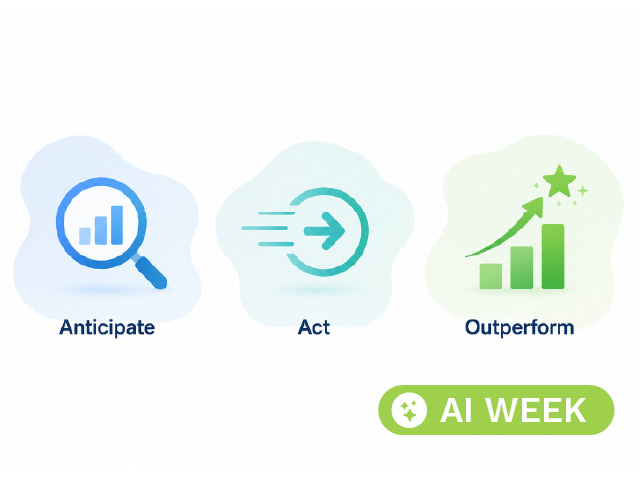
Anticipate, Act, Outperform: AI for Modern Commercial Property
AI for Modern Commercial Property Commercial property is under increasing pressure; from rising costs and compliance demands to shifting tenant expectations and investor scrutiny. This session explores how property leaders are moving from reactive ma…