Navigating the changing face of Britain’s high streets

The British high street is going through a period of incredibly dynamic change. But it need not be all doom and gloom, because diversification could lead to reinvigoration of our town and city centres – a shift in which proptech will play a pivotal role. For instance, an MRI Software survey of chief executives, directors and top managers in the property sector revealed 72% see the development of residential properties in former retail premises giving the British high street a new lease of life.

It is a change that’s badly needed. According to research by PwC and the Local Data company, the retail slump hit record levels in the first half of 2019 with a net decline of 1,234 chain stores – an average of 16 stores closed each day – on Britain’s top 500 high streets. With changing consumer habits, new technologies and the rising business costs continuing to hit retailers, a growing number of real estate investors and landlords are evolving their strategic outlook to look at how multiple asset types and mixed developments can deliver success.

At MRI we are seeing roughly three-quarters of major retail investors now looking at diversifying developments to feature residential and leisure space, as well as more traditional commercial components. This growing trend is demonstrated by major players such as Intu and Redevco announcing major moves in the residential sector within the last 18 months. The problems posed by retailer closures and a chronic lack of new housing are coming together to create a solution for both, with the MRI research showing that 82% of the senior property professionals surveyed see mixed use developments with a strong housing component as a lucrative opportunity – and it could ultimately lead to a healthier high street.

More residential property on the high street then opens opportunities for leisure, hospitality and other related projects such as health clubs, specialty cafes, entertainment venues and other non-retail businesses. We’ve seen recently, for instance, that gyms are one of the few types of business growing in city centres. Indeed, the future of high streets will be areas where people are able to live, work and play – changing the way companies that own, develop and rent out those spaces operate. In order to gain a competitive edge in this changing marketplace and identify suitable new opportunities quickly, they will need to adopt a data-driven approach supported by technologies that enable them to manage increasingly complex property portfolios.

The key will be to employ technology, the kind provided by MRI, that equips businesses to gain actionable insight into their holdings and operations, helping inform business strategies and activities. We can see the growing importance of property technology in guiding this transition from the results of the MRI survey, with half of the respondents seeing it as critical to growing their business, boosting productivity and tackling regulatory challenges. The research also revealed that the overall uptake of proptech in the UK is strong, with two thirds of the companies surveyed already adopting a solution.

As high streets evolve into more complex and rounded communities, owners, developers and property managers will need digital tools that allow them to engage with residents, commercial occupiers and stakeholders in a more complete, in-depth and consistent way than they ever have before. Taking this more customer-centric approach will require specialist technology such as self-service online portals for tenants of all types, and even maintenance teams and contractors. MRI’s own suite of portals enable access to data, the ability to share important information with residents and automated business processes – from managing payments and simple enquiries to handling amenity bookings and ensuring maintenance requests are fulfilled. The result is community collaboration that will suit these mixed developments.

Those who invest in the real estate at the heart of the UK’s towns and cities need to equip themselves to manage the shift to an altered mix of occupiers and new business models. Investing in technology to manage property assets, as well as changing customer relationships, is quickly becoming essential for businesses to leverage the data and insight they need to take full advantage of the growing opportunity to reshape Britain’s high streets.

Learn more about property trends and the overall state of the UK market in this MRI Software survey.

Simplify the residential lifecycle with MRI Living

The expectations of today’s renters have changed, and multifamily property managers must be prepared to meet those expectations to stay competitive. Being able to maximize occupancy with the right residents, retain them with a high-end experience, and keep track of progress toward business goals are crucial to property management in the digital age.

MRI understands that multifamily property managers must excel across each of these areas. MRI Living represents our comprehensive suite of end-to-end residential software solutions designed to help multifamily property managers rise to the latest challenges facing the industry.

A day in the life of a multifamily property manager
Keeping residents happy isn’t just one of a dozen ways to protect your bottom line – it’s the lifeblood of your business. You don’t just manage units and buildings; you manage people’s homes, and the best way to build a good relationship with those people – your residents – is to offer them the best experience you possibly can.

The development and preservation of a landlord/resident relationship is the story that lies at the heart of the residential lifecycle, and the tools provided through MRI Living and our extensive partner ecosystem can help you develop that relationship and excel at every step of that lifecycle. Through MRI Living, you’ll be empowered to attract great residents, simplify living, run your properties effectively and efficiently, and utilize your data to plan for the future.

1. Attract great residents

Prospects are consumers by nature, and every consumer today starts the search for their desired purchase online. Did you know that 73% of renters in the United States are younger than 44 years old? On top of that, nearly 100% of them have a cell phone, and over 90% have a smartphone. This means that it’s more important than ever that your property and brand has online visibility so that prospects can find you.

After you get a prospective resident engaged with your property, you’ll want to get a lease signed in a way that makes things as easy as possible for both your prospect and your leasing staff.

Utilizing the proper software solution can help you get your organization out in front of the right prospects at the right time, and it can also help fast-track the leasing process in a convenient and effective manner.

2. Simplify living

Property Managers aren’t just in the business of real estate; they’re in the business of taking care of people. Astonishing residents with your services, amenities, and general “customer service” skills will increase the likelihood that they will renew their lease.

Considering that many of today’s residents are from younger generations, traditional amenities such as pool access and workout areas don’t hold as much clout as they used to. Today, providing convenient digital amenities, transparency, and tools that make life easier for you and your residents can go a long way.

At the same time, providing a satisfying and easy resident experience doesn’t rest entirely upon your shoulders. There’s a balance between the two extremes of overbearing communication with residents and forcing them to go searching for information. The proper tools can help you on your quest to find the best way to simplify living for both your residents and your property staff.

3. Run smoothly

So you’ve automated the lead-to-lease process and are providing self-service tools for your residents, but how well are you automating your back office processes?

If your property isn’t running smoothly, inefficiencies can reverberate across your organization and negatively impact the resident experience. Simplifying your day-to-day property management tasks with tools that maximize operational efficiency and minimize risk can help alleviate your worries.

At this stage in the residential lifecycle, you as a property manager can put your best foot forward with your new residents. Getting a new lease signed is one thing but providing a satisfying experience for an existing resident is another. Even if you feel that you’ve built a solid foundation of trust through the leasing process, residents often spend a greater amount of time adjusting to their new homes, and you have a critical role to play in ensuring that process is as smooth as it can be.

4. Know the score

As you’re working towards making your operations more resident-centric than lease-centric, it’s important that you keep track of your data and assess the health of your organization to see what’s working and what’s not.

The health of your business is a critical aspect of property management that you shouldn’t be neglecting. Knowing the score and keeping track of your progress can help you reach your goals and maximize profitability.

The more you provide for your residents, the more you’ll find that their retention will become predictable. This aspect of property management isn’t just good business; it’s a good way to stabilize your bottom line and prepare for the future by keeping your occupancy rate high.

Excel throughout the residential lifecycle
The lead-to-lease process is essential to your property operations, but it doesn’t represent the full scope of your responsibilities as a property manager. The road to success in today’s ever-changing industry starts by firing on all cylinders at every step of the residential lifecycle.

With the right tools at your disposal, you’ll be able to fully commit to your organization’s future. Utilizing residential property management solutions can enable you not only to carry out your daily operations, but to prepare yourself for whatever challenges may lie ahead.

Learn more about MRI Living and how you can excel in every step of the residential lifecycle.

The MRI Ecosystem: Celebrating our partners at Ascend 2019

The MRI Ecosystem was on full display at MRI Ascend in Anaheim last week. Our users conferences – whether they’re in North America, Europe, Asia Pacific, or even South Africa – have always been about bringing together our clients and partners to showcase our comprehensive and flexible technology platform and the open and connected partner ecosystem that supports it.

MRI’s Partner Connect program is at the heart of our approach to real estate software. The sea of exhibitors at MRI Ascend is living proof that openness is integral to our corporate vision and that the momentum of our partner program shows no sign of slowing down.

We’d like to say thank you to all the great partners that helped make MRI Ascend a success, especially our Diamond sponsor, AvidXchange, and Platinum sponsor, Nexus. The conference simply would not be the same without your support!

Partner of the Year: insightsoftware

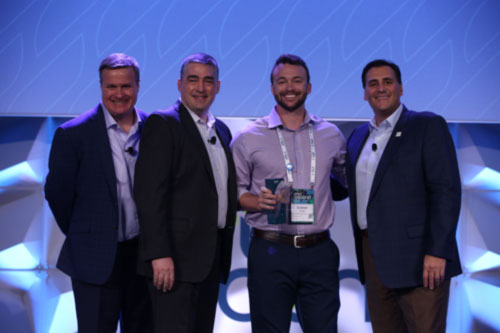
We’re proud to recognize insightsoftware as the 2019 Partner of the Year. As an outstanding member of the Partner Connect program, insightsoftware has been a true advocate for flexibility and choice, and our mutual clients have benefitted greatly from the integration of Spreadsheet Server and MRI. Congratulations to insightsoftware!

Honoring our partners in the MRI Ecosystem

Our partners have many outstanding achievements, so we were thrilled to hand out even more awards for at the MRI Demo Theater Stage. We want to extend a special congratulations to these partners for your hard work!

Most Active in the myMRI ForumsAJB Consulting
Highest Number of Newley Adopted Mutual Clients YoYProcore for Owners
Highest Number of Certified Individuals in Certification ProgramFitechGelb
Highest Number of Enrolled Individuals in Certification Program – FitechGelb

Of course, this whole event would have been impossible without all of our wonderful sponsoring partners. Through their support, we were able to demonstrate that openness and flexibility are in high demand within the real estate industry, and the success of MRI clients is living proof that it works.

Reaching new heights at MRI Ascend 2019 in Anaheim

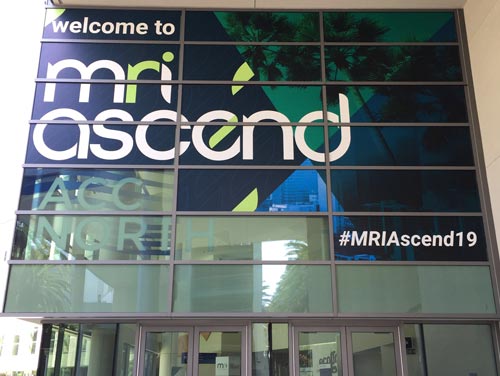
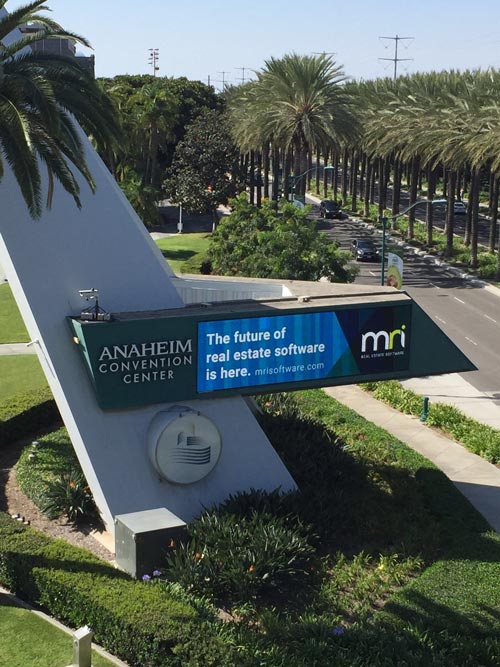
MRI Ascend and the open and connected ecosystem took Anaheim, California by storm last week! More than 1400 real estate industry professionals and 60 partners gathered at the Anaheim Convention Center to network with each other and explore what’s new with MRI Software. We were thrilled to pull back the curtain on several innovative solutions that will help MRI clients do more than just stay ahead of the curve, but also rise above it.

MRI users conferences have always stood as the living embodiment of the open and connected ecosystem, where our clients can leverage flexibility and choice to create the solution that works best for their business. This year, we were excited to unveil a record number of new solutions designed to help real estate organizations in a variety of ways.

This way to comprehensive and flexible real estate software solutions!

At MRI Ascend, we proudly announced MRI Application Gateway, which provides a single point of entry to Platform X. Through an app-based launch screen, users can securely access their MRI and third-party applications, bringing all of the solutions you love and use regularly into one familiar interface.

We also unveiled MRI Secure Sign, which enables clients to efficiently create and send real estate documents for signature with purpose-built integrations from within the MRI platform.
As businesses continue to move operations online, it’s more important than ever to control and protect digital documents and signed contracts.

MRI Living
The MRI Living suite now includes two new innovations: MRI Payments and MRI Lead Management. MRI Payments allows multifamily properties to handle multiple payment types, including online and check payments, through an integrated solution that delivers a complete prospect and resident experience. MRI Lead Management brings leading-edge technology for tracking and engaging potential residents into the MRI Living suite of residential solutions to give owners and operators the ability to manage prospects from lead to lease. Today’s renters expect to be treated like people, not metrics, and the MRI Living suite enables residential property managers to take a customer-centric approach and improve the renter experience.

MRI @ Work
In the same way that MRI Living helps residential property managers meet the needs of their market, MRI @ Work houses all of the products that will help commercial property professionals rise above their industry challenges.

One of our newest products is made possible through the power of artificial intelligence. MRI Lease Intelligence brings AI-powered lease abstraction into the MRI @ Work suite of commercial solutions through the integration of Leverton and MRI. Acquired by MRI in July, Leverton enables commercial property owners, operators and occupiers to efficiently extract lease data and analyze it to gain insights. This solution ensures data accuracy by directly integrating MRI Lease Intelligence with MRI property management solutions.

Congratulations to the 2019 MRI Innovation Awards Winners!

At MRI, we think our partners and clients are pretty great, and we’re proud to be working together to drive transformation and openness in the real estate industry. Our Second Annual MRI Innovation Awards were announced on Tuesday during the general session, and we want to extend a very special congratulations to all who were recognized. Here are the winners:

Community Award: The CT Group
Flexibility Award: Harbor Group Management
Ambassador Award: Cecilia Li, Urban Edge Properties
Partner of the Year Award: insightsoftware

The future of real estate software is here

MRI Ascend is a living, breathing representation of the open and connected partner ecosystem that we strive to create for our clients. It’s an honor to do business with some of the most innovative and forward-thinking real estate organizations across the globe. While this year’s Ascend users conference was a huge success, we hope to see even more of our partners and clients in San Diego next year on October 25-28, 2020!

Don’t just stay ahead of the curve – rise above it!

Two ways to automate your lease abstracts (and when to use each)

This blog was written by Itzik Spitzen, co-founder and CTO of LeasePilot. LeasePilot, an MRI partner, is a context-aware lease automation platform. As the architect of the company’s software framework, Itzik takes a hands-on approach to managing the company’s technology strategy and software engineering teams. Itzik holds a Master’s Degree in Computer Science as well as Practical Software Engineering diplomas from premier academic institutions in Israel.

Of all the things that need to be done during a leasing lifecycle, creating an abstract is far and away the most dreaded task. But because of the abstract’s centralized importance to the daily operations of every real estate business, it’s a necessity. And until recently, it has been a necessity with no shortcuts. But emerging technologies are finally providing viable alternatives to the traditional process.

At a conceptual level, there are only two possible ways that a lease abstract can be automated. But before I can talk about and compare each method, there’s some important background I need to cover first.

Making Breakfast with Structured Data

Computers and the software that runs on them — including the so-called “artificial intelligence” software — are dumb.

Coming from the CTO of a software company, that might sound like a provocative statement. But I don’t believe that it is. In fact, I think most of my peers would agree with me. If you’re skeptical, here’s an experiment you can try right now:

Step 1: Unlock your smartphone and open the Calculator app.
Step 2: Tap the following buttons: 2 + 2 =
Step 3: Observe the result

Hopefully your calculator produced an output of 4. Everything is working as it should. Go ahead and clear that result so we can continue. This time, let’s throw your calculator a proverbial curveball:

Step 4: Type the following sequence: 🥓 + 🍳 + 🍞 =
Step 5: Observe the result

At this point, astute readers may have noticed that Step 4 is impossible. Even WolframAlpha, the most advanced AI-powered calculator available to the public, can’t make sense of the emoji math above. But you probably figured it out instantly. The answer to 🥓 + 🍳 + 🍞 is, quite obviously, breakfast.

The reason why your Calculator app can’t handle EmojiMath is obvious enough: it wasn’t designed to understand emoji-based inputs. To enable a computer to understand EmojiMath, an engineer would need to add new rules to the calculator software specifying the meaning of each new emoji. The important takeaway here is that computers don’t have general intelligence in the same way that human beings do. Even so-called artificial ‘intelligence’ is task-specific; you can’t use a self-driving car’s AI to trade stock on the NYSE.

So what does all of this have to do with lease abstracts? Everything, actually. The purpose behind this exercise is to introduce the concept of structured data as the essential and fundamental prerequisite for software-based automation of any kind. Structured data describes information that is indexed and formatted in a way that a computer can understand. When you and I look at a lease, we see and understand the structure. But a computer does not. To a computer, there’s no structure to a lease beyond the string of words, punctuation, and line breaks that the document contains.

So when we’re talking about how a computer can automate a lease abstract, what we’re really talking about is how we can convert the raw, unstructured data in a commercial lease into structured data that a computer can understand. And there are only two ways that can be done:

1. Machine Learning Analysis
2. Context-aware ‘Snapshot’

The rest of this piece will discuss how each method works and when to use it. Note that these methods are complementary and have very different use cases. A cutting-edge leasing team will be able to use both in its workflow.

Method 1: Machine Learning Analysis

In a nutshell, the Machine Learning Analysis method uses advanced software to “read” a lease and convert it into structured data that a computer can understand. This process requires a lot of time and computing power, and as a result, a Machine Learning Analysis is typically only run after the final version of a lease is signed and executed. There are a handful of different technologies that a Machine Learning Analysis uses, but for the sake of brevity I’ll focus on the most crucial: Natural Language Processing.

Natural Language Processing (NLP) uses an algorithm to convert the unstructured human language in a commercial lease into a structured dataset that computers can work with. The algorithm works by comparing the unstructured language in the lease to a large sample dataset of pre-structured leasing language. Over time, the algorithm “understands” the meaning of the content in the new lease and builds a logical data structure around its findings.

Although these algorithms aren’t perfect—a human still needs to review the results and correct any mistakes—they “learn” more with each new lease and grow more accurate over time. With all of the grammatical oddities and complexities implicit in human language, this feat is nothing short of amazing.

Method 2: Context-aware ‘Snapshot’

Lease abstraction using the ‘Snapshot’ method is relatively new on the CRE scene. This method doesn’t require a complicated NLP algorithm, uses minimal processing power, and can produce an error-free abstract instantaneously (no human review required). Given all of these advantages over the Machine Learning Analysis method, you’re probably wondering why the Snapshot method isn’t common practice. Here’s the catch: a Realtime Database Snapshot can only produce an abstract from a lease that is drafted and revised using software built specifically for creating commercial lease documents.

Although specialized leasing software is relatively new, it operates on the same principles that every real estate lawyer and paralegal already knows reflexively: commercial leases have a logical structure with a predictable framework. For example, when an extension option is added to a base lease form, the lawyer drafting the lease automatically knows that s/he will need to update the term, rent tables, and assignment provisions accordingly. The lawyer knows the broader implications a single change can have because s/he is aware of the larger context.

Specialized leasing software operates on the same idea of contextual-awareness. It’s the equivalent of giving your computer a comprehensive ‘map’ of your base forms and option language before a lease is drafted. When it’s time to draft a new lease, the software uses the ‘map’ to build your lease with data that’s already structured. As default option language is added, removed, or manually modified during the negotiation process, the underlying data is continually updated in real time. With this approach to lease-drafting, creating an abstract is as simple as a ‘snapshot’.

Context-aware lease-drafting tools are relatively new to the industry, and as such the snapshot method isn’t as well known as Machine Learning Analysis. But as more and more landlords begin to take advantage of context-aware drafting tools, there’s no doubt that this type of software—and abstracts created with the Snapshot method—will be the industry standard in the next 5-7 years.

Use the Right Method

Now that you have a better understanding of both abstracting methods, the reasons why these methods are complementary are easier to understand. Let’s bring them into view more clearly.

When to use a Machine Learning Abstract

The primary advantage of Post-Lease Analysis is its flexibility. It can be used to create an abstract for almost any lease, which makes it particularly useful when landlords acquire new assets or wish to gather historical leasing data from their portfolio.

The downside of the Post-Lease Analysis method is accuracy and consistency. After the analysis is run, the abstract still requires human review and correction which limits the scalability of the method and eliminates the feasibility of abstracting each iteration of a lease draft during negotiation.

For these reasons, the general rule-of-thumb is that landlords should use the Post-Lease Analysis method for leases on tenant paper or legacy leases.

When to use a Data Snapshot Abstract

Producing an abstract using the Snapshot method is the future of leasing. Its advantages over Post-Lease Analysis are clear: It’s instant, it can be run with each draft to speed up negotiation, and it’s 100% accurate every time.

The obvious downside is that a Snapshot is only possible with leases that are created with specialized lease-drafting software on the landlord’s forms. But as context-aware lease-drafting software becomes the industry norm, this drawback is becoming less important every day.

How AI is improving the lease abstraction process

One of the biggest challenges in the commercial real estate sector has always been the cumbersome nature of leases. Commercial leases are filled with large volumes of detailed information and finding one specific point can take hours. The process of extracting data and manually entering it into spreadsheets can take even longer and carries a high risk of human error.

Using an AI-powered solution for Lease Abstraction, however, has proven to be one of the most effective leaps forward in time-saving innovations. Over the past several years, LEVERTON, an MRI Software company, has developed technology that uses artificial intelligence to improve the lease abstraction process.

The problem

If you’ve ever had to read through multiple commercial leases and compare terms, conditions and other information, you know that this process is tedious and time consuming. Manual tasks like moving data from several different contracts into one central location don’t just take up valuable time, they leave you more exposed to human error. Even if you’re able to identify those errors, going back and fixing them can take just as long.

Taken from LEVERTON’s own studies, skilled employees across the workforce have reported losing up to ten hours a week on the manual entry of data. Human error is the leading cause of accounting mistakes, and the average financial impact that poor data has on a business is estimated to be around $9.7 million per year.

With statistics like that, it’s very clear that businesses inside and outside the real estate industry are in dire need of a tool that speeds up the process and improves the accuracy of the data entered and extracted. Paper-based documentation, manual data extraction, and continuous data re-entry make for a more complicated, time-consuming process that leads to limited contract analysis, data inaccuracies, and no audit trail.

The solution

Quick and easy data extraction is possible through AI-powered solutions. Through optical character recognition (OCR) software and developing deep learning techniques, LEVERTON has harnessed technology that makes lease abstraction much easier. 73% of the respondents from LEVERTON’s survey said they have already received measurable value from big data and AI initiatives.

AI-powered solutions that have been developed in the past several years give you the ability to digitize documents, structure data in a centralized repository, automate real-time data updates, and utilize predictive analytics that save category information from previously uploaded leases. With LEVERTON’s AI solutions, pulling data from your leases can be automated. The process looks something like this:

1) Organization – OCR technology will convert your selected document into texts that are machine readable.

2) Extract – AI will pull key data from the documents and link each point to source information. This functionality means that the AI is learning from every lease that comes across the platform. It understands the terms, and it increases accuracy over time.

3) Analyze – Once steps one and two are complete, you’ll be able to access the platform and explore the data from different angles. You’ll be able to search for important parameters. You’ll also have any important dates pulled from the lease added onto a calendar feature, or you can opt to create your own custom calendar.

4) Integrate – Exporting the data will allow users to consume it with the desired target system.

Lease abstraction, if done manually, can be a grueling process. But with Lease Intelligence from LEVERTON, you can cut down on the time it takes to manage your leases and regain confidence in your data.

Learn more about how AI can help you achieve your lease abstraction goals in this webinar.

3 keys to comprehensive pre-employment screening

The people you hire to operate, manage, and work for your multifamily property business are equally as important as those you choose as residents for your properties. Having the right pre-employment screening process means utilizing a service that enables you to hire as quickly as possible, validate all licenses or degrees, and adapt the criteria for different roles.

In order to get the most out of your pre-employment screening service, you’ve got to make sure that you choose a provider that meets the needs of your multifamily business, offers a quality screening service, and complies with state and federal regulations.

1) Choosing the right employment screening provider

When you choose a pre-employment screening vendor, you’re not just buying a product; you’re choosing to trust someone with one of the most foundational aspects of your business.

Many aspects of the new hire process rely on communication, and as a multifamily property manager, there will be times when you need to fast-track the hiring process. Maybe you’ll need to fill an unexpected vacant position, or perhaps you need to get someone hired before a seasonal influx of move-ins/move-outs. For these reasons, it’s important to have several different lines of communication between you and your employment screening provider.

Of course, none of the many channels of communication will do any good if your screening provider doesn’t offer timely or thorough responses to your inquiries. When the speed of your new hire process relies on a third party, you’ve got to be sure your provider responds quickly, and that they set aside ample to answer any questions you may have.

Depending on the position you’re looking to hire, you will likely need access to different sets of criteria for different job roles. For example, perhaps you’re looking for applicants that will be working with your organization’s financials, and you need to see which candidates have the proper training and certifications. When you’re choosing a screening tool, you should ask questions like, “Do they offer all of the different background checks we need?” and “Can we screen for the right standards on a case-by-case basis?”

2) Using a thorough screening service

The reason employment screening is so foundational to your organization is because it lays the groundwork for good business interactions, both internally and externally. Using the proper screening service enables you to improve the quality of your hires, protect your company’s reputation, and reduce the risk of legal or criminal exposure. In short, your employment screening service should be serving the same ultimate purpose of minimizing risk that your resident screening does.

Any discussion around a pre-employment screening service would be incomplete without of course mentioning the primary goal of said screening: improving the quality of new hires. One new employee can act as a morale boost among your current employees, especially if this hire has the skills and abilities to do the job well. A bad hire can have an impact on company culture and the overall reputation of your organization.

Making the right hire also helps to protect the reputation of your multifamily property. In the same way that flaws in your resident screening can be felt throughout the organization’s back office, flaws in your employment screening can cause problems that reverberate into the resident experience. The right hire can help keep your operations moving at an efficient pace.

Finally, utilizing the best employment screening service means running the proper criminal background checks. This aspect might seem fairly straightforward to the untrained eye, but as property managers know from their resident screening experiences, background checks can be a legal minefield. The same applies for your pre-employment screening service. Running new hires through the right background checks doesn’t mean rejecting applicants with a criminal history – you’ve got to remain in compliance with local and federal laws.

3) Complying with state and federal laws

The screening service you choose needs to be in compliance with the Fair Credit Reporting Act (FCRA). Enacted in 1970, the FCRA was aimed at protecting the rights of applicants and new hires. This law determines what personal information can be considered in a background check, and it allows applicants to review that information and contest any details they feel are inaccurate.

When it comes to background checks, there are steps that you as the property manager can take in order to remain compliant. By using all of the proper forms, keeping your applicants adequately updated, and allowing applicants to review their own data, you can ensure that your organization keeps up with the background check process in a fair and legal manner.

Like your resident screening, your pre-employment screening can have a vast impact on every part of your business, so it’s important to use a service and provider that works for you. MRI Software offers both resident screening and pre-employment screening, making the onboarding process as easy as your lead-to-lease operations. Learn more about our pre-employment screening service in this webinar.

Separating facts from fake news: Open tech platforms for UK sales and lettings

From 24-hour TV news to the endless stream of information available online, it’s becoming increasingly difficult in the modern world to cut through the noise and get to the facts. The property sector, particularly the residential agency space, is no different – but when we hear providers talking about their pioneering efforts to deliver open and connected solutions to the market, we feel the need to speak up.

Last year, MRI Software’s Chief Marketing Officer, Mandira Mehra, addressed this in a post, politely pointing out our annoyance that others in the real estate technology industry seem all too happy to jump on the bandwagon of our open and connected ethos. Fair enough – it’s an approach that’s won us much praise. You can’t blame others for looking on with interest. But when we see others claim to be groundbreaking or unique in their efforts, we draw a line.

When we revealed a new brand identity in 2017, it reflected our commitment to offer clients freedom, choice and flexibility in every market and region we serve. It was a bold new strategy in our industry, and it’s one we’ve embedded at the heart of our organisation, and have continued to develop and enhance in the two years since.

UK residential sales and lettings is an area of our business where it is particularly active. Interoperability is crucial within the market and we have led the way in offering two-way integrations between our products, complementary point solutions and recognised platforms that are widely used in the industry. Across our suite of agency solutions, there are more than 50 such examples, both with members of our Partner network and a wider ecosystem of proptech providers and innovators. From referencing and marketing through to utilities management and communications, we have led the way in enabling leading operators to create a flexible and connected tech stack, built on our comprehensive platform, that works how they need for their business.

The importance of openness is demonstrated by the amount of chatter there’s been on the topic in recent months. Such is the appeal, there are players willing to ‘hype up’ their message. Of course, we’d be hypocrites if we just expect you to accept our own credentials as gospel. But, that’s the point. Challenge our claims. Ask us to prove them. We’re confident that you’ll find we don’t just talk the talk.

Indeed, we encourage you to ask questions wherever and whenever you see or hear tech organisations singing their own praises on this topic. To help, we’ve provided some guidance on what you should be looking for in these two articles: 10 qualities of providers that embrace open technologies and 10 ways to tell if your enterprise software provider is truly open. Only by putting providers to the test will you be able to sift through the empty statements – and it seems there are plenty out there.