
Building evacuation plans – what everyone should know
At MRI OnLocation we want everyone to know that there is a safer way to do building evacuation – that is, by using the latest visitor management technology.
No matter where we are in the world, there is always a risk of a natural disaster occurring at any point in time. Natural disasters serve as a reminder that businesses should run their building evacuation processes in the most efficient, yet safest way possible. After all, it’s impossible to know when and where events such as earthquakes will happen. Business directors and floor wardens have a moral and legal responsibility to make sure they have an adequate means of ensuring everyone is safe and accounted for in an emergency.
It seems as though every time we watch the news we hear of another disaster around the world. There has been a tremendous amount of flooding and of course the devastating bushfires in both California and Australia. These disasters remind us of how real our responsibility is to let those responsible know what technology is available to them to help keep their people safe. With MRI OnLocation, you can make sure everyone is accounted for, so that first responders and emergency services to get to anyone needing help in the shortest possible time.
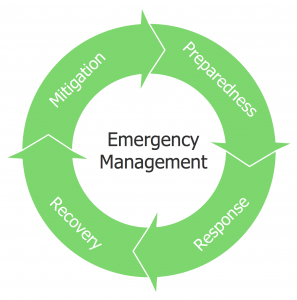
What should you do when you need to evacuate in an emergency?
Fire:
- Activate the fire alarm.
- Call 911 immediately and provide information.
- Assist injured personnel or notify emergency responders of the medical emergency.
- Exit the building following emergency maps.
- Assist physically impaired individuals to a secure area and notify emergency responders.
- Ensure all personnel are out of the building.
- Do not use the elevators.
- Use a fire extinguisher only if it is safe to do so and you have been trained.
- Assemble personnel at a remote location noted on evacuation maps.
- Report hazardous conditions.
- Stay low if confronted with smoke. Check closed doors for heat before opening.
- Stay away from the building until it is safe to return.
Earthquake:
- Seek cover immediately, in a place close by and out of the way of windows and significant hazards.
- After the shaking has stopped, run a check for injuries and safety hazards.
- After it is deemed safe, begin evacuating.
- Those needing assistance to exit the building should be helped.
- The evacuation should take place using a stairway, not an elevator.
- During an evacuation, people should be aware of falling debris and other hazards.
- The muster point for an earthquake emergency should be in an open area where it is safe to do a roll call.
Flood:
- Listen to your local radio stations as emergency management officials will be broadcasting the most appropriate advice for your community and situation.
- If you have a disability or need support, make contact with your support network.
- Put your emergency plan into action. Be prepared to evacuate quickly if it becomes necessary.
- Where possible, move stock or other items to higher ground.
- Consider using sandbags to keep water away.
- Lift valuable items and chemicals as high above the floor as possible.
- Fill containers with clean water in case water becomes contaminated.
- Turn off utilities if told to do so by authorities as it can help prevent damage to your community. Unplug appliances to avoid damage from power surges.
- Do not attempt to drive or walk through floodwaters unless it is absolutely essential.
For some useful information on how to plan for and what to do should an evacuation event occur, see:
- Ready.gov website
- Emergency and disaster preparedness guide
- All Business – Evacuation Planning Ideas
- Emergency management software
Evacuation technology
Because we work in the visitor management, contractor, employee, and evacuation management business, we know (and see) the many benefits that come from knowing who’s on-site and who isn’t at any time. We also know that one of the most significant advantages of using an electronic visitor management system is having the ability to verify the safety of people during an evacuation event quickly.
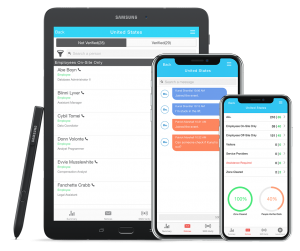
Why use a visitor management system?
MRI OnLocation actively encourages businesses to use visitor management software to run evacuations. The technology is inexpensive, easy to implement, and can make all the difference not only around emergency services response time but the general organisation of evacuation events. Our cloud software MRI OnLocation came about after Founder, Darren Whittaker-Barnett, was involved in a somewhat shambolic evacuation event. At the time, he decided there must a better way to account for everyone during an evacuation. This was when the genesis of MRI OnLocation was born.
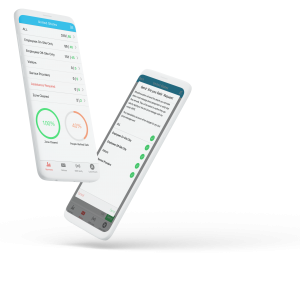 Using a visitor management system with those on-site: employees, visitors, contractors (or off-site in the case of lone workers and such), logged and ready to do a roll-call (in person at the muster point or online) can mean the difference between life and death. And, being able to pull up a list of those who need assistance during evacuations on your mobile device straight away means you can get to those people fast and not risk leaving them behind. If your evacuation management system is in the cloud, you can also run communications between wardens, emergency services, and first responders. You can also send out a bulk text to make sure everyone is accounted for and clear buildings zone by zone.
There are other forms of technology that can be useful in a natural disaster.
Here’s a list of 7 apps that might be of use in an emergency.
Keep your people safe!
Use this chance to ensure your emergency and evacuation policies are as effective as they can be before the emergency is real. The risk from natural disasters, not to mention building fires and other events, is real, and there is a good chance your office building will have to be evacuated at some stage. Don’t leave the safety of those you are responsible for to chance. Implement visitor/evacuation management technology today and make sure everyone is accounted for in an emergency evacuation.
See how MRI OnLocation can make your building evacuation plan safer and more effective today.
Minimizing risk in your building operations
This article was written by Daniel Millstone, VP of Engineering at Enterprise Risk Control, a partner of MRI Software.
Building operators and property managers are on the front lines when it comes to mitigating a variety of risks. What many property managers have been slow to realize is that the impact of risk is far-reaching, and it can enter the business through each phase of the asset lifecycle, whether it be through equipment, assets, or vendors.
Your organization’s risk exposure
The risk of financial loss, damage to your property’s reputation, and regulatory problems aren’t just secluded to one area of the asset lifecycle. You can be exposed to risk in each phase of the lifecycle.
- Asset acquisition: When acquiring new assets, your company is taking on the risk associated with the asset. Because of the acquisition of risk, it’s important for you to conduct due diligence on the seller, including financial, reputation, and regulatory evaluation.
- Operation and maintenance: When it comes to your organization’s exposure to risk, preventative maintenance measures can minimize financial loss. Additionally, maintaining an accurate fixed assets register with current values can make information more reliable and readily available for all who need it.
- Decommissioning: Proper documentation, maintenance history, and other information can minimize the hand-off risk when assets or equipment are decommissioned.
Imagine for a moment a building operator named John. John has been using Vendor X for one of his properties for several years. Vendor X is easy to deal with, they work well within the set budget, and as far as John can tell, they get the job done. John collected all of Vendor X’s credentials and licensing during the initial vendor onboarding process, but he neglected the ongoing collection and verification of the vendor’s credentialing information as the relationship continued.
One day, John takes a closer look at Vendor X and the work they’ve been doing on the property. The closer he looks, the more he realizes that not only has Vendor X been cutting corners on equipment maintenance, they also allowed their trade license, insurance and other credential information to lapse. If John had monitored and updated vendor data and performance, he would’ve noticed how they were misusing the property, creating unnecessary costs, and not in compliance with regulations. But at this point, it’s far too late. John will pay a heavy cost to fix the damage that’s been done to the property.
Three major ways risk can impact your property
Building operators and property managers often have multiple properties to manage within their portfolio, and many times, things slip through the cracks without anyone noticing. As you may have guessed, this kind of lapse can lead to serious exposure to risk. When an incident occurs, your business is at risk of being impacted in three major ways:
- Financial: Since John hadn’t been keeping a watchful eye over Vendor X, he didn’t see just how far the property had fallen into disrepair. Preventative maintenance measures might have saved money, but John was too late for that. Purchasing new assets or equipment is always more expensive than making sure they’re being managed well.
- Reputational: Since Vendor X was doing sub-par work, the property had developed a reputation over time of being “run-down” and “dilapidated.” Had John done a better job of managing Vendor X, he might have prevented the risk to his company’s reputation.
- Compliance: Vendor X let their licensing and credentials expire, which means that John’s property was not in compliance with certain local laws and regulations. John might have been able to catch this had he been continually reviewing and managing the data he collected from Vendor X.
How automation can help reduce risk
While no method of risk mitigation lets you completely eliminate your exposure, automation can help you better manage the risk, no matter where it can be found in the asset lifecycle.
Most building operators collect vendor data upfront, but some tend to store it in a spreadsheet or binder and then never look at it again. Through automation, this data can be updated and continuously managed as time goes on so that important information, like an expired certificate of insurance, doesn’t go unnoticed.
Barcoding your assets and taking pictures of the equipment when maintenance occurs will help confirm the work was completed on the correct equipment. In addition to this, automating vendor data and workflow can help you establish a consistent process for managing vendors, assets, and equipment to reduce risk.
As a building operator or property manager, risk can be found everywhere, and its impacts can be devastating financially, reputationally, and in a regulatory sense. By automating your processes, however, you can lower your exposure and be better prepared for any problems that may arise. Learn more about how technology can improve your building operations and management.
Combatting energy wasters: energy efficient lighting
We are MRI: Achieving strategic goals with a winning culture
Anyone who’s ever been employed at MRI Software knows that being a part of the MRI family isn’t just about finding a fulfilling profession, it’s about being an integral part of helping MRI achieve its goals. Over the years, we’ve been honored to receive several awards specifically dedicated to MRI’s unique culture, our outstanding workspaces, and how the intersection of those two valuable assets has helped MRI grow into one of the best and biggest real estate software providers on the planet.
Attracting top talent
In 2019, MRI was thrilled to win a NorthCoast 99 Award for the 12th time, which recognizes the best Northeast Ohio workplaces for top talent. Winners of this award participated in a rigorous application process that asked for detailed information on how their organization addresses top-performer attraction, development, and retention. While this is not our first time winning, we are proud to have won this award for so many years.
Cultivating health and wellness
One of the ways that MRI Software attracts top talent is by creating a workplace that encourages a healthy lifestyle. Look no further for proof than our Gold awards for Healthy Workplace from the Healthy Business Council of Ohio, which we have won three times since 2016. MRI employees have access to in-office incentives and a rewards program that promote healthy lifestyles across each and every one of the MRI offices throughout the globe, and these opportunities are reflected in this win.
In the summer of 2019, MRI was also recognized by Aetna’s Workplace Well-being Awards. MRI won both a “Changing the World” Award for workplaces in the Mid-Atlantic region and the “Above and Beyond” Award for general well-being in the workplace across the country. We are proud to accept these awards, and we are committed to continuously treating our employees well to promote excellence in the workplace and to foster a community where kindness, honesty, tolerance, and inclusion are part of the culture.
Our strategy of the “MRI family”
MRI’s commitment to its employees runs even deeper than these few awards suggest. We pride ourselves on creating a culture that encourages employees to work hard and achieve the strategic objectives of this company, and we truly do treat them as extensions of our family. Throughout the past few years, we’ve provided increasingly more avenues for personal and professional growth within the organization. Employees don’t just have “upward mobility” at MRI – they have the opportunity to explore the organization in lateral ways that help them pursue career goals instead of simply climbing a ladder. For example, an employee who starts their career at MRI in Sales is not required to stay there – they have the chance to move into a different department should they choose to down the line.
Volunteering in communities around the globe
As you can probably see, MRI has no desire to chain employees to their desks and demand they work on the same things in their entire time here. Growth means exploring new opportunities, and one of the newest opportunities at MRI is our coordinated volunteer effort that takes place in each MRI location. These volunteer events aren’t just a great way to allow employees to make a difference outside the office, they’re an extension of MRI’s mission to transform the way communities live, work, and play.
Global growth and strategic achievements
The emphasis we place on growth for our employees is a core part of MRI’s cultural identity, and it’s absolutely critical in achieving MRI’s strategic goals of large-scale growth. Our employees are beyond talented, and at MRI, we strive to be not just a place where they can work, but a place where they can excel. As such, our company culture has enabled our employees to bring MRI Software into the places it needs to be to expand its market share.
MRI Software was recently honored with a Dealmakers Award from ACG Cleveland that highlights the exact ways in which MRI has been able to achieve its strategic objectives in the past few years. The expansion we’ve experience – 8,500 enterprise clients, tripling of the size of the business, strengthening our product offerings and capacity for future innovation – has brought MRI Software, the open and connected partner ecosystem we’ve cultivated, and the benefits we provide our employees to 30 locations worldwide and over 170 countries.
While the awards mentioned here have been directed towards our headquarters in Northeast Ohio, the MRI family has expanded well beyond the region. It’s made up of every single one of our employees, whether they be in North America, the United Kingdom, South Africa, Australia or beyond. Everyone has access to the same opportunities and benefits. We are MRI, and the best is yet to come.
Horizon in the news: MRI solution NOT related to stories about UK Post Office
It’s possible you’ve spotted the name ‘Horizon’ in the press recently.
We would like to confirm that MRI Horizon, our enterprise real estate management and investment software solution, IS NOT the system which has been the subject of recent news stories relating to the UK Post Office.
Articles, such as this one on the Independent, refer to a Horizon IT system. To reiterate, and to reassure our many existing clients and potential users, the Horizon in question is in no way connected to MRI Software.
Hopefully, this allays any concerns that may have arisen.
Thanks, and season’s greetings!
Survey says: How real estate tech experts feel about new trends
At the NMHC OpTech annual conference earlier this month, I had the pleasure of moderating the “Ask the Tech Pros” panel. It was a great opportunity to hear from a few top Tech leaders in the industry, including CIOs, VPs, and Technology Directors as they collectively discussed security, operating in the cloud, and enablement through software. During the session, we used live polling to get the audience’s opinion on nine buzzwords to find out how applicable they are in the real world. The respondents indicated whether they have already piloted or adopted the particular tech, if it’s slated for 2020 or by the end of 2022, and if they had no plan to adopt or consider it.
Below are the survey responses, and some quick thoughts on them, for nine tech topics with varying degrees of adoption across the real estate industry. The volume of responses ranges from 40 to 51 session attendees, which is a random sampling from the 2300 attendees at the event. So, for full disclosure, this is not a strictly scientific study, but it’s interesting data from a vertically focused audience.
Virtual Reality
Definition: The computer-generated simulation of a three-dimensional image or environment that can be interacted with in a seemingly real or physical way by a person using special electronic equipment, such as VR goggles, a helmet with a screen inside or gloves fitted with sensors.
Proptech Application: Virtual reality can be used to furnish and explore physical spaces in a digital realm. For example, one could “tour” the digital recreation of an apartment space, whether empty or fully furnished, without actually being onsite.
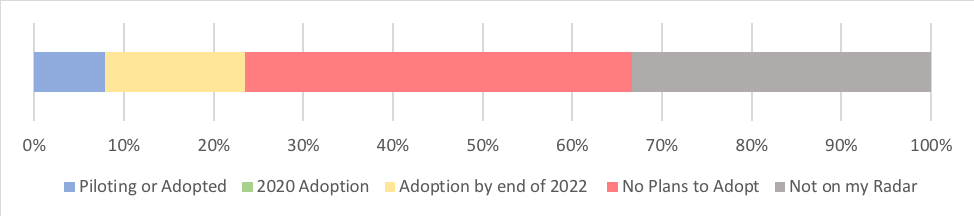
Results indicate limited adoption currently and through 2022 with a large majority not having plans or simply not considering. As this technology is still maturing, these results are not surprising. The piloting and limited adoption is likely tied to new construction where a foundational digital model (BIM) is an increasingly common tool that can provide a basis for virtual reality applications.
Augmented Reality
Definition: A technology that superimposes a computer-generated image on a user’s view of the real world, thus providing a composite view.
Proptech Application: With your smart device, and your future smart glasses, one could see leasing advertising, amenity information, potential furniture, or even a virtual tour guide superimposed on physical reality.
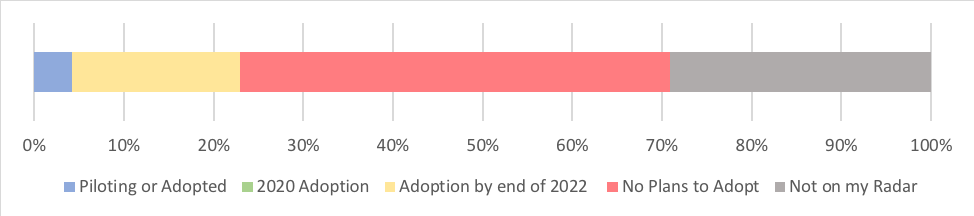
These results show that people feel similarly about virtual and augmented reality, with a large majority of respondents not having plans to adopt or simply not considering it. Both technologies are still maturing, but augmented reality will be driven by the likes of Google, creating the visualization layer that real estate operators will leverage.
Digital Twin
Definition: A digital twin is a digital representation of a physical object or system. The twin has the ability to receive input from sensors that gather data from the real world, allowing it to simulate the physical object in real time, in the process offering insights into performance and potential problems. The twin could also be designed based on a prototype of its physical counterpart, in which case the twin can provide feedback as the product is refined; a twin could even serve as a prototype itself before any physical version is built.
Proptech Application: With new construction, it is now standard to utilize a digital, three dimensional model (BIM) to address potential construction issues (collision detection) in the digital realm and not in the field where costs can quickly escalate depending on the magnitude of the issue found. The BIM model is largely a static model, meant to drive development and it can be leveraged for Virtual Reality applications as noted above. A digital twin would take that model forward and use it for a framework to display operational information in new real time. From binary measures like occupancy to real time measures of energy and water consumption, the digital twin will combine the sensors from the Internet of Things (IoT) with the digital representation of the asset.
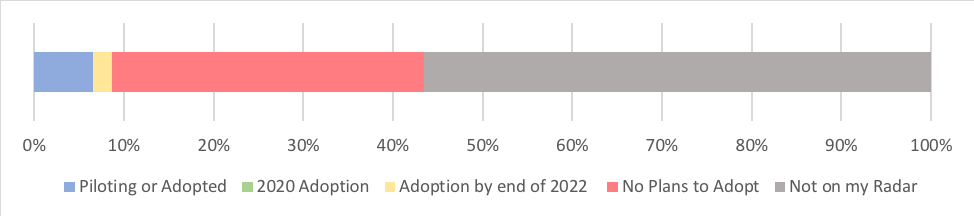
Results indicate a vast majority of respondents not having plans or simply not considering. With investment required in both creating the digital twin as well as the instrumentation of the physical asset, it is not surprising that most firms do not yet have this on their agenda.
Smart Home/Unit
Definition: A smart apartment is a living space outfitted by smart devices such as smart lights and locks, as well as integrated services like home cleaning and package delivery. Smart apartment buildings are also wired from the inside-out to connect devices, building systems, residents, and management.
Proptech Application: This was one of the more popular topics at this year’s NMHC OpTech. Locks, lights, sensors, gates, and package lockers/rooms are all aspects that can make an apartment “smart” – the definition is quite broad. These technologies are making their way from the single family market to the multifamily market where complexities increase with the number of units and the relationship between landlord and resident. Smart apartments can drive increased rent as an amenity that will attract some residents. Smart technology can also impact risk management (by detecting unusual water usage), utility costs (by programming vacant units to adhere to HVAC and lighting schedules) and staff efficiency (by allowing access for turn activities through the use of digital keys or remote lock actuation).
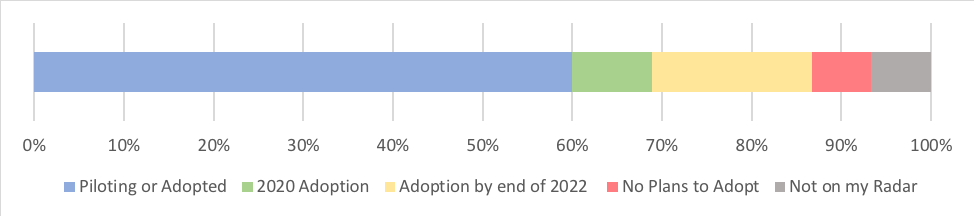
Given the number of exhibitors and session on this topic, these results are what one would expect – substantial adoption of these technologies through 2022 with many respondents reporting current pilot and production usage. Device connectivity is the most frequent barrier and there are a number of ways to solve that problem as we approach 2020, with more (5G) on the way. The other frequent barrier is involved with ownership, access, and control over the devices. This grey area between the resident and the landlord must be carefully addressed to optimize the benefits for both parties.
Unaccompanied (or Self-Guided) Tours
Definition: This should be pretty straight-forward – it’s a tour where one either navigates a route by oneself or is directed in some way, shape, or form by mobile technology in place of a human guide.
Proptech Application: Imagine prospects touring apartments unsupervised, leveraging digital content as well as staged materials, to explore a model unit without the pressure of a leasing agent being present. Leveraging smart locks, digital keys and other tech, these tours are expanding the self-service possibilities on sites, freeing staff for additional activities.
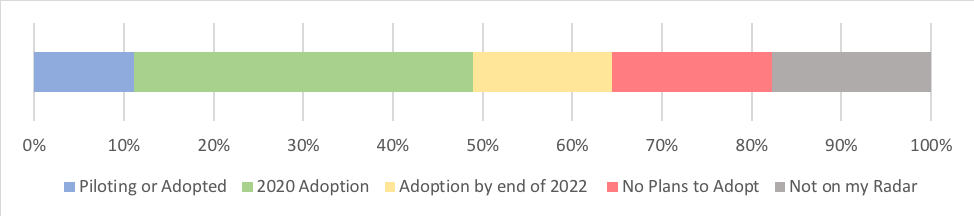
The popularity of this topic at the conference is reflected in these survey results as well with nearly half of the respondents reporting adoption by the end of 2020. This technology is currently available and, more importantly, the attitude towards this has warmed from skeptical to receptive, as early results are continuing to show a positive impact on leasing.
Conversational AI
Definition: Conversational AI refers to the use of messaging apps, speech-based assistants and chatbots to automate communication and create personalized customer experiences at scale.
Proptech Application: This technology is starting to replace humans in initial interactions for phone calls, chat and text. Leveraging the AI of providers like Google, Amazon and Twillio will provide capability at scale to have natural language exchanges with prospects and residents. While it may start with simple interactions, the complexity and scope will continue to grow.
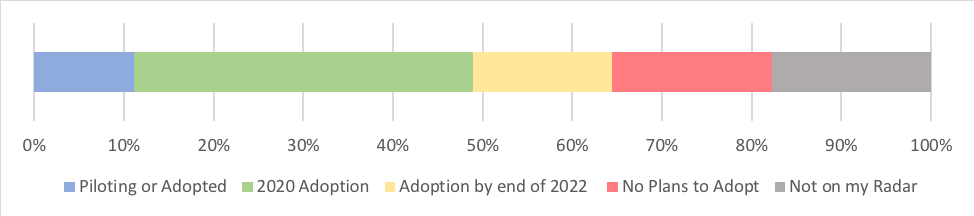
These results are also consistent with the popularity of this topic at the conference. Combining natural language and artificial intelligence will, in time, provide better customer experiences than generic call centers and can currently handle simple requests and exchange of information.
Robotic Process Automation
Definition: Robotic process automation (RPA) is the use of software with artificial intelligence (AI) and machine learning capabilities to handle high-volume, repeatable tasks that previously required humans to perform.
Proptech Application: Proptech forms need automation as much as any other enterprise. As a term, RPA is broad in scope and many things can fit the bill, including things you are likely already doing.
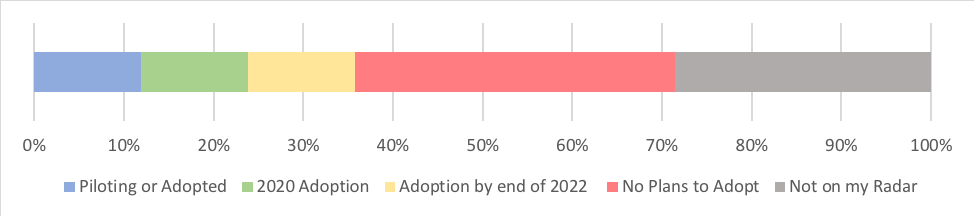
As panelists, we were all a bit shocked by this result as we expected more adoption. Consensus is that this outcome is part definitional (the term was new to this audience) and that, considering the large net that RPA casts, many firms are doing something that would qualify as RPA and they just were not aware of the connection. The other thing to consider here is that the customer audience might be looking for more industrial grade solutions from providers as opposed to building something on their own.
Blockchain
Definition: A blockchain is a time-stamped series of immutable data records managed by a cluster of computers but not owned by any single entity. Each of these blocks of data (i.e. block) are secured and bound to each other using cryptographic principles (i.e. chain).
Proptech Application: While the idea of separating data across several locations for security reasons may seem enticing to some, there are currently very few actual use cases for this technology. Potential applications for this technology as it pertains to the real estate industry today is abstract at best.
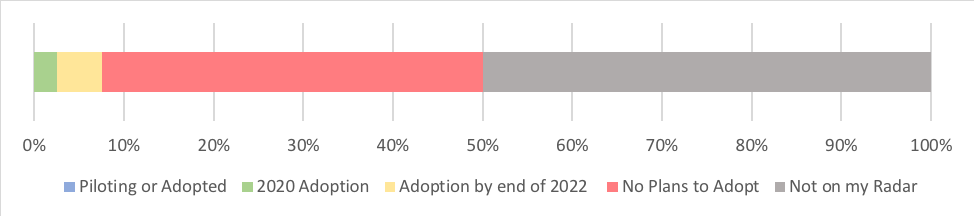
Blockchain, while promising, is still a hammer in search of a nail as it is a generic technology that has yet to find a compelling use case in multifamily proptech that has gained traction.
Venmo-like Payments
Definition: Venmo is a free-to-use mobile payment app that allows users to send and receive money. The app is owned by PayPal and connects with users’ and businesses’ bank accounts or credit cards to send and receive funds online. It is currently only available for users inside the U.S.
Proptech Application: Currently, roughly 50% of residents still pay rent with a check, either because they like checks or because their landlords do. The other half are using some form of traditional electronic payment (ACH, debit, credit). Venmo, as more of a peer to peer payment app, allows the transfer of funds between individuals with little more than an email address shared between the parties.
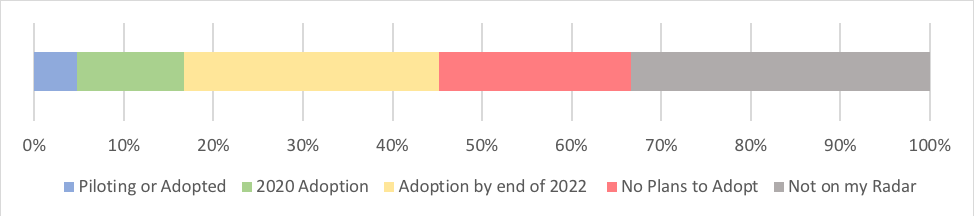
These results were what we expected. As digital natives continue to be the dominant demographic in our communities, checks will become less frequent and alternative mobile payment methods will continue to emerge. We did a quick show of hands in the room, asking if any residents had already inquired about paying rent with Venmo or a similar vehicle and a large number of attendees indicated that the topic has been raised. As electronic payment providers bring this feature to market as another payment choice in their offering, the adoption of these payment types should increase more quickly.
The results gathered from this informal study are quite clear when it comes to which technologies and trends are making gains in the industry. While adoption for AI-based solutions and smart device compatibility will continue to be strong into 2020 and beyond, technologies like virtual and augmented reality still need some time to mature before they can gain traction. More proven technologies will continue to be leveraged to drive efficiencies and improve customer experiences while a clear application for blockchain has yet to emerge.
Want to learn more about where real estate technology is going in 2020? Catch up on some of my predictions for the new year.
8 real estate technology trends for 2020
Real estate technology in 2020 will present an opportunity for both residential and commercial firms to differentiate themselves through relationships. In the coming year, we predict that technology will be a catalyst that enables firms to drive tenant satisfaction, keep occupancy rates high, and build stronger relationships with everyone from residents to investors. We’ll see continued technology adoption in the industry as more firms gain real value from their software.
1. The most anticipated downturn still won’t happen… or will it?
Spoiler alert – no one has a crystal ball that will predict when “the most anticipated downturn in history” will happen. The only thing we’re certain about is that speculation will continue regarding the timing of the downturn. But, based on a very unscientific survey that we conducted at the MRI Ascend Users Conference in Anaheim, a room full of industry leaders thinks that the downturn will take place in the second half of 2020 or early 2021.
Pro tip: Regardless of when the real estate cycle ends, firms that leverage technology to mitigate risk and drive efficiency will be better positioned to weather the storm.
2. AI gets (more) real
Building on the momentum of prior years, 2020 will bring more pragmatic applications of artificial intelligence (AI) to the real estate industry. All new technology goes through an initial hype cycle, and AI is no longer a shiny new object but has moved closer to actual implementation. As tech adoption gains strength, and more firms embrace the use of data and analytics, AI can optimize traditionally manual processes such as lease abstraction and also impact the business in more strategic ways – enabling faster decision making, increased visibility and transparency, and improved tenant satisfaction across the portfolio.
Pro tip: Exploring the use of AI to automate manual processes, make data more easily accessible, and empower your staff will help firms evaluate opportunities more quickly and grow the value of the portfolio faster. There will also be AI opportunities in customer-facing arenas where natural language processing is become more of the norm.
3. Big data becomes smart data
Deloitte’s 2020 Commercial Real Estate Outlook says “real estate is no longer about ‘location, location, location;’ it has evolved into a new mantra: ‘location, experience, analytics’.” Real estate firms have long been enamored with the idea of gaining insights from data, but the groundwork required to actually achieve ROI from it has historically been difficult to put in place. In the coming year, the real estate industry will be better equipped to leverage data with the help of proptech solutions that enable integration and standardization. In the past, firms have looked to data for short-term insights, but over the coming year, technology will provide ways for firms to analyze data as part of a longer-term strategy.
Pro tip: Data science and analytics will be a prominent feature in the future of the industry, and real estate professionals should educate themselves on basic data science as it will become an integral part of daily jobs at all levels in the organization.
4. New consumer privacy regulations will surprise many
Real estate firms, particularly multifamily owners and operators, will need to put processes in place to comply with new consumer privacy regulations. The California Consumer Privacy Act (CCPA) goes into effect in 2020, and it will have an impact far beyond just California. The recent General Data Protection Regulation (GDPR) enacted in Europe has had a global impact. Other than NMHC, there are few industry voices talking about GDPR or CCPA yet. The requirements of these new regulations and the fines for non-compliance will catch many off guard.
Pro tip: Multifamily owners and operators need to have a detailed understanding of how their organization manages data, so they will be better prepared to comply with potential changes to consumer privacy practices.
5. Proptech is more than a buzzword
The term “Proptech” is no longer just a hashtag – it’s an industry, and it refers to more than just the tech startups that are disrupting real estate. As we predicted last year, VCs are no longer throwing money at ideas — the companies that provide real value to clients have emerged as successful. But with a broader array of technology tools to choose from, real estate owner/operators will be challenged to sift through the noise and effectively evaluate the available options.
Pro tip: Real estate firms with tech-savvy leaders who can distinguish between disruption and innovation will be better equipped to evaluate the technology providers vying for their business.
6. Digital amenities for renters are table stakes
Multifamily property managers know that today’s renters expect digital services and amenities, from the time they start searching for a new apartment, to signing the lease, and moving out. Most renters are Millennials and Generation Z, and virtual tours, electronic lease signing, online rent payments and package management are table stakes now.
Pro tip: Multifamily properties that embrace the shift to a more resident-centric approach will be able to attract and retain residents more efficiently by providing digital services.
7. Increased focus on the customer experience
Most multifamily operators have already shifted from a lease-centric approach to a more wholistic resident-centric mindset to increase occupancy and resident satisfaction in their community. But commercial firms will soon experience a similar trend. The landlord/tenant relationship will become a vendor/customer relationship, making metrics around tenant satisfaction, appreciation, and turnover more important than ever, especially as commercial leasing continues to become more fluid.
Pro tip: At the property level, landlords will need to proactively invest in their properties and monitor them more closely to keep tenants happy.
8. Affordable Housing will still be a conundrum
As interest rates continue to go down, money will be cheap. This allows developers to get financing more easily, but they will likely continue to focus on high-dollar development opportunities instead of low income and affordable housing. For affordable property managers, efficiency and automation will be key to achieving results with limited resources.
Pro tip: Purpose-built software can help affordable property managers automate compliance, manage multiple funding types, and streamline operations so they can better serve the community.
We may not have a crystal ball, but as a pioneer of the real estate software industry with nearly 50 years of experience, we’ve seen many changes over the decades. 2020 will certainly bring some challenges and opportunities, but real estate firms that leverage technology to manage their relationships and their assets will come out ahead.