Change management strategies for AI rollout at properties
Artificial intelligence is reshaping property management, but the real story isn’t the technology itself. It’s how leaders use AI to amplify the strengths of their teams, improve resident experiences, and scale what works across a portfolio.
The challenge is striking the right balance: moving fast enough to capture efficiency gains, while building trust and empathy so adoption feels collaborative, not disruptive.
This blog explores a practical path forward for the effective training of property management staff on AI tools. Here’s what we’ll focus on:
- Framing AI as a tool that supports people
- Identifying the metrics that matter beyond cost savings
- Turning small wins into repeatable results at scale
At the close of 2025, I was privileged to participate in a panel at the National Apartment Association Assembly of Delegates. The discussion highlighted how consistent data, clear success criteria, and thoughtful change management can reduce maintenance emergencies, lift satisfaction and renewal rates, and accelerate lead-to‑lease conversion — without losing the human touch that defines great communities.
Where to start?
It’s easy to feel overwhelmed by the pace of innovation, but the solution is to start with focus. Identify a single pain point, pilot a solution, measure the impact, and expand deliberately. With the right foundation, AI becomes a strategic enabler of connection and performance, not just another platform to manage.
Focus on clear metrics, phased implementation, and transparent communication to position your property management organizations to capture the full potential of AI, while maintaining the trust and engagement of your teams.
1. Leading with inclusion: Making AI work for everyone
Effective AI adoption in real estate begins with leadership that prioritizes inclusion and collaboration. Engaging stakeholders from the outset by soliciting input from property managers, leasing teams, and residents ensures that AI solutions address real operational challenges, not hypothetical scenarios. This participatory approach surfaces the most impactful use cases, builds trust, and reduces resistance to change.
Leaders must communicate that AI is designed to augment, not replace, human expertise. Framing AI as a strategic asset that enhances the capabilities of experienced professionals is essential for building buy-in across generational lines. Stay focused on the nuance, purpose, and meaning that your teams contribute – these are elements that AI cannot replicate.
Training should emphasize collaboration between technology and people, while open forums for dialogue allow teams to share insights and address concerns. In this way, empathy remains central, ensuring that technological advancement complements, rather than overshadows, the human element.
2. Measuring what matters: The true ROI of AI
Quantifying the return on AI investment requires a comprehensive approach that goes beyond traditional cost-benefit analysis. Industry leaders are increasingly focused on metrics that reflect operational efficiency, resident satisfaction, and portfolio growth. AI-enabled predictive maintenance can reduce emergency repairs, which directly impacts the bottom line. AI-driven property management chatbots and multifamily AI leasing assistants can elevate the resident experience, driving improved satisfaction scores and renewal rates.
Growth-oriented metrics, such as lead-to-lease conversions, provide additional insight into the strategic value of AI. By tracking these indicators, organizations can demonstrate how AI accelerates leasing cycles, optimizes resource allocation, and enhances portfolio performance. Establishing clear benchmarks at the outset of any AI initiative enables leaders to evaluate outcomes objectively and replicate successful strategies across assets.
3. Scaling success: From pilot to portfolio
Scaling an AI pilot to a region-wide or portfolio-wide implementation requires rigorous planning and disciplined execution. The foundation of scalable AI lies in data consistency; standardizing data inputs and workflows across properties ensures that AI models receive clean, reliable information. Change management is equally vital, requiring targeted training and transparent communication to align teams with new processes and expectations.
Portfolio size introduces additional complexity. Large organizations benefit from phased rollouts and robust governance frameworks that manage risk and maintain quality control. Smaller portfolios can be more agile, but they must still prioritize scalability from the outset to avoid future bottlenecks. In all cases, defining success metrics early and monitoring them throughout the rollout enables organizations to identify and replicate high-impact practices, ensuring that AI remains a strategic capability rather than a one-off experiment.
For an easy first step, consider using multifamily property management software with AI capabilities that helps you tap into AI efficiencies without having to disrupt your current processes.
4. Advice for leaders: Building confidence and driving proactive engagement
For leaders navigating the rapid evolution of AI in real estate, the most effective strategy is to begin with clarity and focus. Rather than attempting to overhaul multiple processes at once, identify a single, well-defined operational challenge — such as maintenance response times or lead follow-up delays — that directly impacts property performance or resident satisfaction. By concentrating resources on a targeted pilot, organizations can generate actionable insights, measure tangible outcomes, and build momentum.
Communicate the rationale behind AI initiatives at every stage, ensuring teams understand both immediate objectives and the long-term vision. Transparent dialogue fosters trust, mitigates apprehension, and encourages cross-functional collaboration. Leaders should prioritize phased implementation, allowing for iterative learning and adjustment based on real-world feedback. This approach reduces risk and empowers teams to take ownership of the transformation process.
Establish clear metrics for success. Define what constitutes meaningful improvement whether it is a reduction in emergency work orders, an increase in resident satisfaction, or a measurable acceleration in leasing cycles. Monitor these indicators closely and share results across the organization to reinforce a culture of continuous improvement.
The path forward
Ultimately, successful AI integration is not about adopting every new technology at once, but about building confidence through a series of strategic wins. Don’t feat starting small by taking advantage of AI-enabled property management software that limits process disruptions. By starting small, measuring impact, and scaling thoughtfully, leaders can inspire proactive engagement, foster a culture of innovation, and position their organizations to capture the full value of AI-driven solutions in real estate.
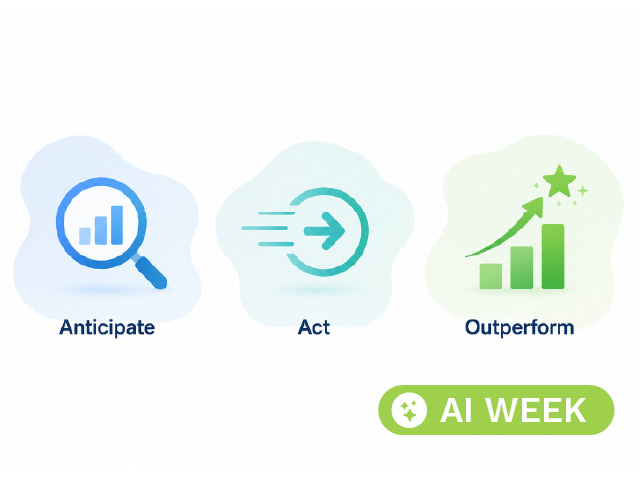
Anticipate, Act, Outperform: AI for Modern Commercial Property
AI for Modern Commercial Property Commercial property is under increasing pressure; from rising costs and compliance demands to shifting tenant expectations and investor scrutiny. This session explores how property leaders are moving from reactive ma…