

Your guide to getting the most from property management technology
Managing a portfolio of commercial properties presents unique challenges for small and growing organisations. If your business oversees a smaller lease portfolio, you’re likely walking a tightrope between working with existing resources and investing in more sophisticated property management tools to fuel growth.
There are some common property management challenges you may encounter whether you operate in retail, healthcare industrial or another commercial sector:
- Time constraints: Balancing property management tasks with core business operations
- Expertise gaps: Lack of in-house skills to get the most out of existing property management tools
- Budget limitations: Difficulty justifying further investment in software or outsourced services
- Scalability concerns: Finding solutions that can grow with the business
- Data management issues: Ensuring accurate, accessible information across multiple properties
Despite these hurdles, effective property management remains crucial for maximising asset value and business growth. The key lies in selecting the right management model and technology strategy that aligns with your organisation’s size, resources and portfolio complexity.

Three approaches to commercial property management
Many commercial property managers know they’re only scratching the surface of their software’s capabilities.
The key to supporting business growth lies in taking advantage of your technology’s full potential – from powerful automation features to time-saving workflows and undiscovered tools that could transform your operations.
We will explore three alternative approaches to help you find the perfect blend of technology and support for your business needs.
1. Internal approach: In-house management
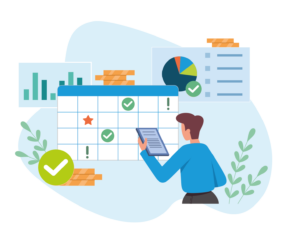 This approach involves fully controlling your property management operations with internal teams and dedicated software solutions. It puts you in the driver’s seat, giving you complete portfolio oversight.
However, many smaller organisations find the downsides hard to justify. These include the investment in training and ongoing maintenance. There’s also the risk of relying heavily on key staff members who may leave and take their software expertise with them.
Typically used by:
Mid-sized to large organisations with established internal expertise and the resources to invest in comprehensive training and software optimisation. These organisations often have dedicated property management teams and technical support staff.
Challenges:
- Initial investment in staff training and software setup
- Steep learning curves when implementing advanced features
- Ongoing responsibility for software updates and system maintenance
- Need to stay current with industry best practices and software developments
- Risk of knowledge loss if key staff members leave
- May require additional IT support and infrastructure investment
Benefits:
- Complete customisation of software implementation to match specific business processes
- Full ownership of data and financial information
- Greater flexibility to adapt processes as business needs evolve
- Potential for long-term cost savings through process optimisation
- Build valuable in-house expertise and institutional knowledge
- Immediate response capability for tenant issues and maintenance requests
2. External approach: Outsourcing to a managing agent
 This approach involves delegating your property management operations to external service providers who bring their systems, processes and expertise to the table. This “hands-off” model allows organisations to focus on core business activities while leaving the day-to-day property management to specialists.
Typically used by:
Larger organisations with substantial budgets that prefer to outsource operational tasks rather than build internal capabilities. These businesses often prioritise strategic activities over daily property management and have the financial resources to support external partnership costs.
Challenges:
- Initial investment in staff training and software setup
- Steep learning curves when implementing advanced features
- Ongoing responsibility for software updates and system maintenance
- Need to stay current with industry best practices and software developments
- Risk of knowledge loss if key staff members leave
- May require additional IT support and infrastructure investment
Benefits:
- Complete customisation of software implementation to match specific business processes
- Full ownership of data and financial information
- Greater flexibility to adapt processes as business needs evolve
- Potential for long-term cost savings through process optimisation
- Build valuable in-house expertise and institutional knowledge
- Immediate response capability for tenant issues and maintenance requests
3. Hybrid approach: Managed services with integrated software provider
 A tailored service where the property management platform provider handles operational and financial processing tasks while the organisation maintains full ownership, visibility and control of their data and portfolio.
Rather than provide an end-to-end property management service, this approach is designed to take a significant administrative burden off the business while allowing it to have control of other aspects of
property management.
Typically used by:
Small teams that want to focus on core operations without the burden of system complexity, but still need access to property data for strategic oversight and planning.
Challenges:
- May require initial collaboration with the software provider to establish workflows and system preferences
- Less cost-effective approach for larger organisations
Benefits:
- Ownership and full visibility of data
- Reduced technical burden on internal teams
- Year-round service team availability to support business continuity
- Enhanced data optimisation and insights
- Faster time to value with expert support
- Scalable support as the business grows
- Lower cost compared to a full outsourcing approach
The advantage of managed platform services for small commercial property owners
For small and growing commercial property management businesses, the managed services approach can offer an ideal middle ground when it comes to optimising technology:
- Avoid a steep learning curve: Leverage expert knowledge without extensive in-house training
- Maintain control and visibility: Unlike full outsourcing, retain access to crucial data and insights
- Focus on core activities: Free up resources to concentrate on strategic property management tasks
- Scale your business: Easily adapt as your portfolio grows without significant infrastructure changes
- Lower operational costs: Benefit from advanced PM tools without the high costs of full outsourcing or in-house expertise development
By choosing a managed platform service, small property management teams can overcome resource limitations, streamline operations, and position themselves for growth – all while maintaining the control and visibility necessary for effective commercial property management.
MRI Software: Trusted solutions with tactical support
MRI Software’s PMX and Managed Services for Property Accounting allow small businesses to improve the performance of their property management systems, blending comprehensive CRE solutions with specialised support that gives you the basis to grow and thrive.
Get a free consultation for your business from our dedicated experts.