

Managing industrial lease agreements in Australia
Managing industrial lease agreements in Australia requires far more than a basic understanding of commercial property contracts. Industrial assets underpin essential business operations, whether warehousing, logistics, manufacturing, or distribution, so the structure and management of these leases directly impact cost efficiency, operational continuity, and long term risk.
Unlike standard commercial leases, industrial agreements often involve more complex responsibilities, higher compliance expectations, and greater exposure to operational risk. When lease terms are unclear or poorly managed, organisations can face unexpected costs, missed strategic opportunities, and disputes that disrupt business operations.
This guide breaks down industrial lease agreements in practical terms, explores proven lease management practices, and outlines what best in class organisations are doing to stay in control of their portfolios.
Understand and plan lease terms
A well managed lease begins with clarity. Industrial lease agreements should be fully understood before they are signed, not just at a headline level, but in the fine print where risk often sits.
Key areas to examine include lease duration, renewal options, rent structures, permitted use, and maintenance obligations. Each of these elements plays a role in shaping both financial outcomes and operational flexibility over time.
Rent review mechanisms, in particular, deserve close attention. Whether linked to CPI, fixed increases, or market reviews, the structure of rent escalation can significantly impact long term occupancy costs. Small differences in methodology can compound over time, making early understanding critical.
Planning lease terms strategically also means aligning them with business goals. For example, organisations expecting growth may prioritise expansion flexibility, while those seeking stability may focus on longer term certainty.
Use professional advice early
One of the most effective ways to reduce risk is to engage professional advisors early in the process. Legal, financial, and property experts bring a level of scrutiny that helps uncover hidden risks and ensures agreements are aligned with both regulatory requirements and business strategy.
Early advice can help:
- Identify unfavourable clauses or hidden liabilities
- Clarify responsibilities between landlord and tenant
- Align lease structures with financial forecasts
- Ensure compliance with Australian property regulations
- Strengthen documentation for audit and reporting purposes
As Ki Currie, MRI Software explains,
Industrial leases often look straightforward on the surface, but risk usually sits in the detail. Centralising lease data early makes those risks visible and manageable.
Industrial leases often appear simple at first glance, but complexity tends to emerge over time. Having expert input early helps avoid costly corrections later.
Negotiate strong lease clauses
Negotiation is where much of the long term value of a lease is determined. Strong, well balanced clauses create flexibility, reduce financial exposure, and allow both parties to adapt to changing conditions.
Important areas to focus on include rent review structures, incentives such as rent free periods or fit out contributions, and provisions for assignment or subleasing. Break clauses and early termination options are also critical, particularly in uncertain economic environments where operational needs can shift quickly.
The goal of negotiation is not simply to minimise cost, but to create an agreement that remains workable over time.
As Ki Currie, MRI Software notes,
The strongest leases are not the most aggressive ones. They are the agreements that anticipate change and define how both parties will respond.

Create a lease checklist
Consistency is key when managing industrial lease agreements across one or multiple sites. A structured lease checklist helps ensure nothing is overlooked and creates a repeatable process for reviewing and managing agreements.
A comprehensive checklist should include:
- Financial terms and rent review dates
- Outgoings and cost recovery structures
- Insurance requirements
- Maintenance and compliance obligations
- Make good provisions
- Renewal and notice periods
- Assignment and termination clauses
By standardising these elements, organisations can reduce risk, improve accountability, and create a stronger foundation for portfolio wide management.
Manage the lease lifecycle
Signing the lease is only the beginning. Effective industrial lease management requires ongoing oversight throughout the entire lease lifecycle.
This includes tracking key dates, monitoring rent reviews, auditing outgoings, maintaining compliance documentation, and preparing well in advance for renewals or exits.
Relying on spreadsheets or manual reminders can quickly become unsustainable, particularly for organisations managing multiple properties. Missed deadlines or inconsistent tracking can lead to financial penalties or lost opportunities.
Centralised systems provide a single source of truth, allowing teams to monitor performance, maintain compliance, and make informed decisions with confidence.
Clarify risk and insurance
Industrial properties inherently carry higher levels of operational risk. From heavy equipment to high volume logistics activity, the potential for incidents is greater than in many other asset classes.
For this reason, lease agreements must clearly define risk allocation and insurance responsibilities. This includes building insurance, public liability, equipment coverage, and business interruption protection.
Clear documentation ensures that both landlords and tenants understand their obligations and reduces the likelihood of disputes if issues arise.
Effective industrial lease management is about more than staying compliant, it is about gaining control. By combining clear lease structures, disciplined negotiation, and proactive lifecycle management, organisations can reduce risk, improve financial outcomes, and create more resilient property strategies.
Reduce the risk and complexity of lease management. Lease management software gives you complete and easy control over complex lease portfolios, helping you centralise data, automate critical processes, and ensure nothing is missed.
If you are looking to improve visibility, strengthen compliance, and take control of your industrial leases, now is the time to explore a smarter approach to lease management. Please click here to request a custom demo, or call 1300 657 700.
Frequently asked questions
Simplify the complexity of industrial and logistics property management
We know maintaining safe, cost-efficient and productive facilities is vital for your business to succeed and drive company performance. For industrial and logistics occupiers, there’s an enormous range of tasks involved in delivering this core benefi…
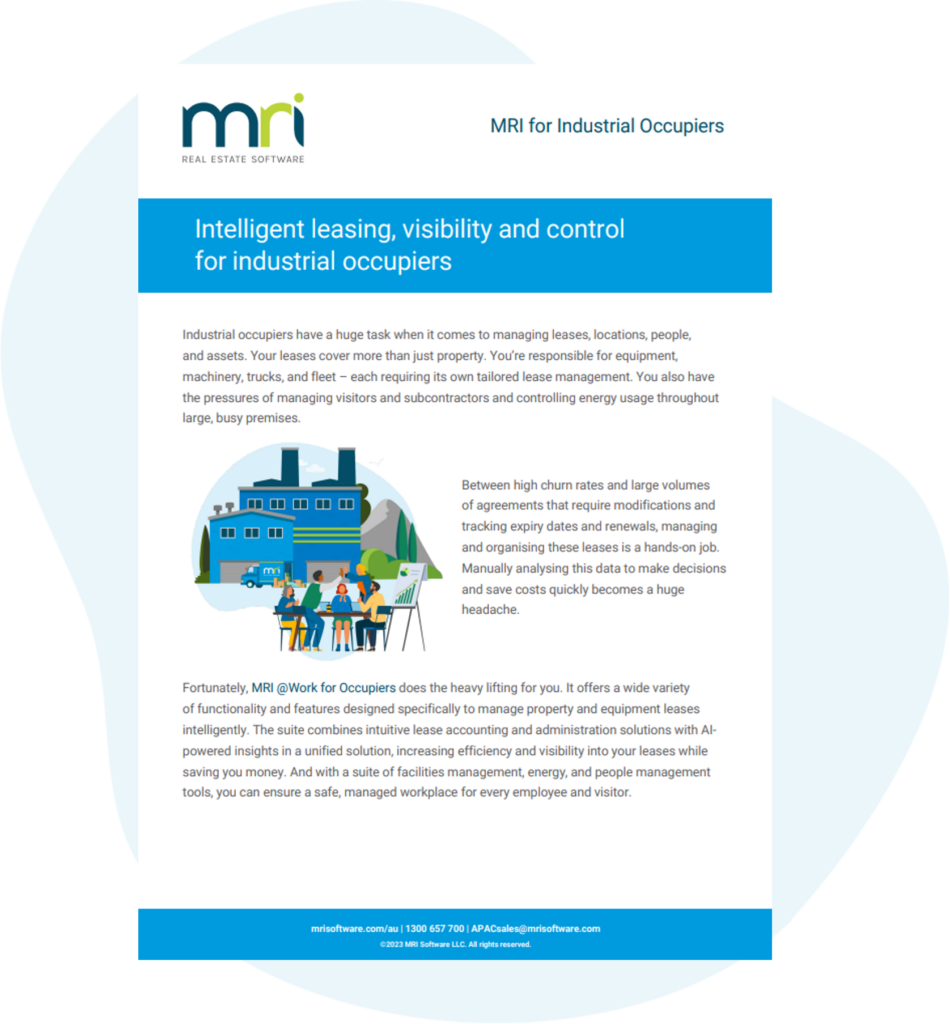

Industrial and Logistics
Software Solutions
Streamline operations with industrial property management software