Criticality analysis explained for commercial real estate in Singapore
In Singapore’s dense and highly regulated built environment, commercial properties depend on a wide range of physical and digital assets to operate safely, efficiently and in compliance with strict regulatory standards. From mechanical and electrical systems to fire safety infrastructure and building technologies, not all assets carry the same level of risk if they fail.
Criticality analysis is a structured method used to identify which assets are most important to business continuity, safety and overall building performance. For commercial real estate owners and operators in Singapore, it plays a crucial role in prioritising maintenance activities, managing operational risk and allocating resources more effectively.
Without criticality analysis, property teams often treat all assets equally or rely on reactive maintenance approaches. This can result in unnecessary expenditure on low-impact assets while exposing critical systems to avoidable risk.
In this article, we explain what criticality analysis is, why it matters for Singapore’s commercial real estate sector and how modern platforms such as MRI Simplicity support more informed, risk-based asset and facilities management.
Criticality analysis is the process of assessing assets based on the impact of their failure. Rather than focusing only on asset condition or age, it evaluates how important each asset is to safety, operations, compliance and business continuity.
In a commercial property context, criticality analysis helps answer questions such as:
- What happens if this asset fails?
- How quickly would operations or tenants be affected?
- Are there safety or regulatory implications?
- What is the financial and operational impact of downtime?
Assets are then ranked based on their level of criticality, allowing property and facilities teams to prioritise maintenance, investment and inspection schedules accordingly.
In Singapore’s commercial real estate environment, where buildings are often multi-tenanted and highly regulated, this structured approach is particularly valuable for maintaining uptime and compliance.
Singapore’s commercial real estate sector is characterised by high asset density, complex building systems and strict regulatory oversight. In this environment, even short periods of downtime can have significant operational and financial consequences.
A failure in critical systems such as power distribution, fire protection or vertical transportation can impact tenant operations, safety compliance and building reputation.
Criticality analysis helps property teams focus resources where they matter most by:
- Prioritising high-risk and high-impact systems
- Reducing unplanned downtime and service disruptions
- Improving safety and compliance outcomes
- Optimising maintenance budgets and resource allocation
As one MRI Software facilities management specialist explains:
In complex buildings, not every asset deserves the same level of attention. Criticality analysis gives teams a rational way to prioritise effort and investment.
While methodologies may vary, most criticality analysis frameworks assess assets across several core dimensions.
Safety impact
Assets that could pose safety risks if they fail are typically considered highly critical. This includes fire safety systems, emergency lighting, alarms and life safety infrastructure.
Operational impact
Some assets are essential for day-to-day building functionality. Their failure may not immediately create safety risks but can significantly disrupt tenant operations, comfort or productivity.
Compliance and regulatory impact
In Singapore, compliance with building codes, safety regulations and environmental standards is mandatory. Assets linked to compliance obligations often carry higher criticality ratings.
Financial and reputational impact
Criticality analysis also considers the financial consequences of failure, including repair costs, lost rental income and potential reputational damage to the asset or organisation.
By evaluating assets across these dimensions, organisations gain a more complete and structured understanding of operational risk.

Fixed Asset Management Software
Have confidence in the accuracy of your asset register and get the depreciation data you need at the touch of a button.
One of the most significant benefits of criticality analysis is its ability to improve maintenance strategy and planning.
Without a structured approach, maintenance programs are often:
- Reactive, responding only after failures occur
- Uniform, treating all assets the same regardless of importance
- Inefficient, with limited ability to justify prioritisation decisions
- Criticality analysis enables a more targeted maintenance strategy by aligning effort with asset importance.
For example:
- High criticality assets may receive condition-based or predictive maintenance
- Medium criticality assets may follow standard preventive maintenance schedules
- Low criticality assets may require minimal or reactive maintenance approaches
This approach improves reliability while ensuring maintenance budgets are used more effectively.
According to an MRI Software product expert:
When maintenance is driven by asset criticality, teams reduce risk without overspending. It is about smarter prioritisation, not doing more work.
Criticality analysis is a foundational step toward risk-based asset management. It shifts organisations from reacting to failures toward proactively preventing the most impactful ones.
For commercial real estate organisations in Singapore, this transition supports:
- Improved reliability and tenant experience
- Better alignment between maintenance strategy and business objectives
- Greater transparency in asset planning and budgeting
It also helps create a shared framework for decision-making across facilities, asset management and leadership teams.
MRI Simplicity is designed for organisations managing complex, enterprise-grade commercial real estate and facilities environments in Singapore.
The platform supports criticality analysis by:
- Centralising asset data across portfolios and locations
- Enabling structured asset classification and prioritisation
- Connecting maintenance workflows to asset criticality levels
- Providing real-time visibility across operations and facilities
By integrating asset information with operational workflows, MRI Simplicity helps organisations move from theoretical analysis to practical, day-to-day execution. To learn more, explore the platform or click here request a personalised demo. You can also speak with our team on +65 6914 2666 to discuss your requirements.
Frequently asked questions
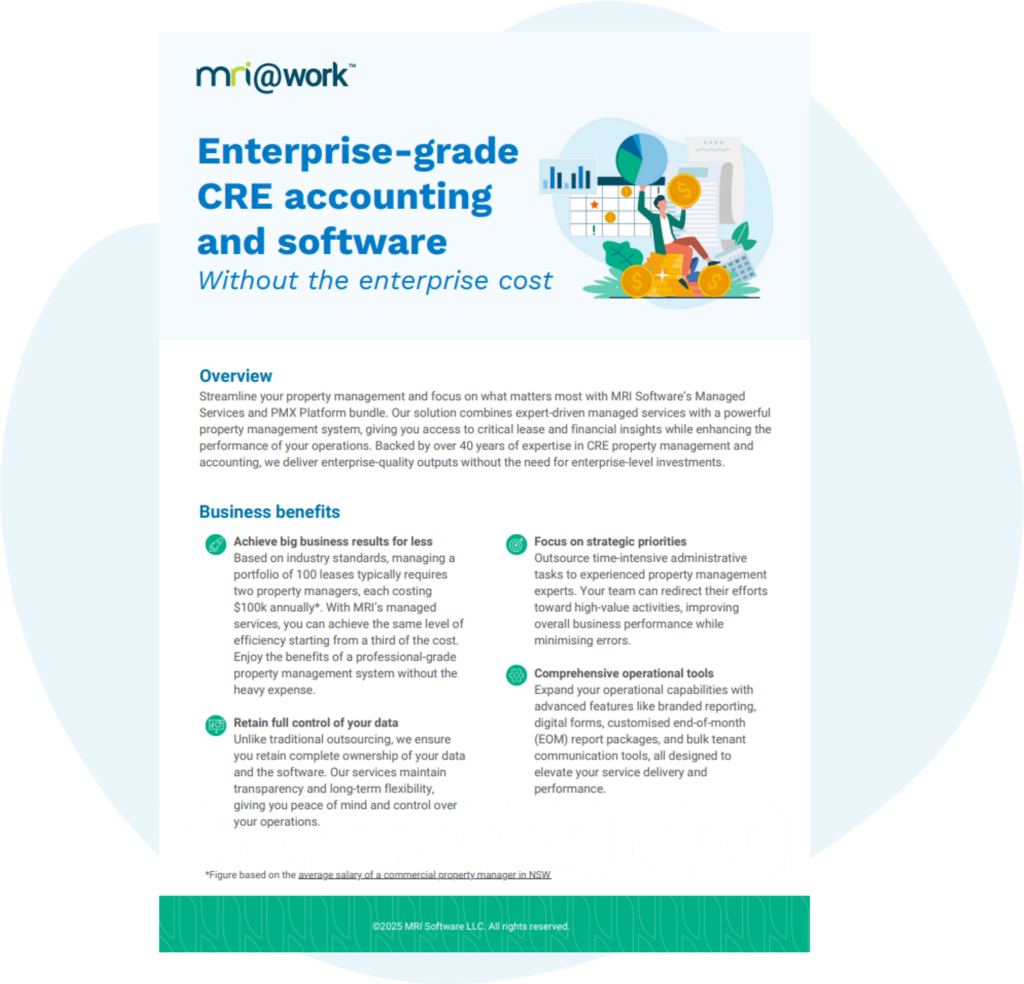
Enterprise-grade CRE accounting and software Without the enterprise cost
Streamline your property management and focus on what matters most with MRI Software’s Managed Services and PMX Platform bundle. Our solution combines expert-driven managed services with a powerful property management system, giving you access to cri…